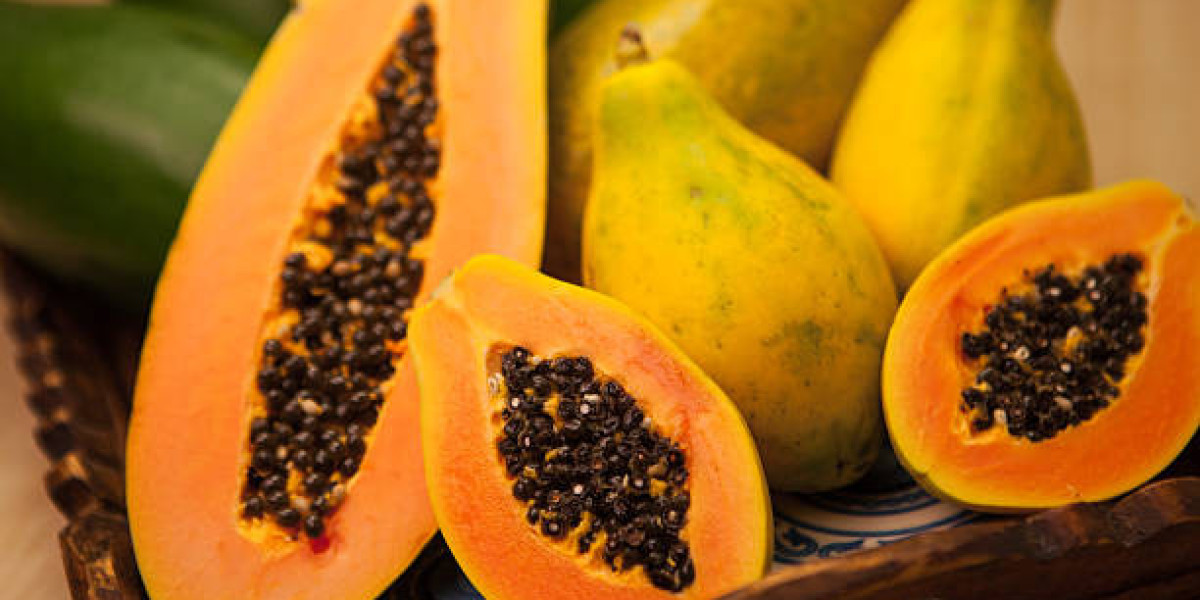

Papaya Market is developing beyond traditional fresh fruit consumption as food manufacturers explore opportunities in value-added processing and diversified product development. Papaya has several commercial applications because its flavor, texture, and versatility make it suitable for different food preparations. In addition to being consumed fresh, the fruit can be transformed into juices, purees, preserves, jams, dried fruit products, and other processed food ingredients. These applications create opportunities for manufacturers, ingredient suppliers, packaging businesses, and agricultural producers. As the food industry continues to respond to changing consumer preferences, papaya processing is becoming an important area of interest for companies looking to expand their tropical fruit product portfolios.
The growing interest in value-added papaya processing and product development is encouraging manufacturers to examine different ways of utilizing fresh fruit for commercial applications. Processing can provide alternative uses for suitable papaya that may not meet the visual requirements of premium fresh fruit retailing, provided that the fruit remains safe and appropriate for consumption. Purees, concentrates, and fruit preparations can serve as ingredients for beverages, desserts, confectionery, and other food formulations. Manufacturers can also explore different packaging formats to improve product convenience and storage. These developments highlight the importance of connecting agricultural production with food manufacturing requirements.
Papaya puree is one of the important ingredients used in commercial food preparation. It can be incorporated into beverages, fruit blends, dessert fillings, sauces, and other formulations. Food manufacturers often require ingredients with consistent texture, flavor, and quality to support standardized production processes. Processing facilities must therefore maintain suitable fruit selection, preparation, hygiene, and storage procedures. Equipment selection and manufacturing efficiency can also influence the quality of the final product. Businesses that establish reliable procurement arrangements with agricultural suppliers can improve raw material availability. Such relationships are particularly important for manufacturers seeking to maintain continuous production and serve commercial customers with dependable product specifications.
Beverage development represents another promising application for processed papaya. Juice manufacturers and beverage companies can incorporate papaya into tropical fruit blends, smoothies, and other fruit-based formulations. Its flavor can complement ingredients such as mango, pineapple, and other fruit varieties. Manufacturers may explore different combinations to create products for consumers interested in refreshing and convenient beverage options. Product development requires careful attention to formulation, consistency, packaging, preservation, and food safety. Companies must also communicate product characteristics accurately through labels and marketing materials. Innovation in beverage packaging and product formats can help brands differentiate their offerings within competitive retail environments.
The confectionery and dessert industries also provide opportunities for papaya-based ingredients. Papaya preparations can be incorporated into fillings, fruit toppings, dessert components, and selected confectionery applications. Food manufacturers may use fruit ingredients to introduce distinctive flavors and expand product variety. Hotels, bakeries, cafes, and foodservice businesses can also incorporate papaya into desserts and customized menu preparations. These applications create opportunities for ingredient manufacturers and suppliers that can provide consistent quality. However, product suitability depends on the formulation and processing requirements of each application. Maintaining flavor stability and appropriate texture is important when developing commercially successful papaya-based food products.
Packaging innovation plays an important role in the commercial success of processed papaya products. Manufacturers must select packaging solutions that suit the product's characteristics, processing method, storage conditions, and distribution requirements. Beverages may require different packaging formats from purees, preserves, or dried fruit products. Packaging also provides opportunities to communicate product information, ingredients, storage instructions, and brand identity. Companies are exploring practical packaging approaches that balance product protection, convenience, and environmental considerations. Effective packaging can support transportation and retail presentation while helping manufacturers meet customer expectations. Consistency in packaging quality is particularly important for businesses distributing products across multiple markets.
Another area of opportunity involves improving resource utilization throughout papaya processing operations. Efficient production planning, raw material handling, quality control, and inventory management can help manufacturers reduce operational waste. Processing facilities can also evaluate suitable approaches for managing agricultural by-products according to applicable safety and environmental requirements. Better coordination with farmers and fruit suppliers can improve raw material planning and reduce unnecessary procurement challenges. Manufacturers may also benefit from investments in modern processing equipment and workforce training. These improvements can support operational consistency while strengthening relationships with commercial buyers, retailers, and other participants in the food production ecosystem.
Looking ahead, papaya processing may continue to create opportunities through product innovation, changing food preferences, and stronger agricultural-to-industrial connections. Manufacturers can explore new applications across beverages, desserts, fruit ingredients, and convenient food products. Agricultural suppliers can benefit from stronger relationships with processors, while packaging and logistics companies can support the distribution of finished products. Maintaining food safety, product quality, and reliable sourcing will remain essential for businesses operating in this category. As the processed fruit industry continues to diversify, papaya offers manufacturers a versatile ingredient for developing products that connect tropical fruit characteristics with modern food consumption preferences.
FAQ 1: What are the major processed papaya products?
Common products include papaya puree, juice, preserves, jams, dried fruit, and fruit preparations.
FAQ 2: How is papaya puree used commercially?
It is used in beverages, desserts, sauces, fruit blends, and different food formulations.
FAQ 3: Why is packaging important for processed papaya?
Suitable packaging supports product protection, storage, transportation, and retail presentation.