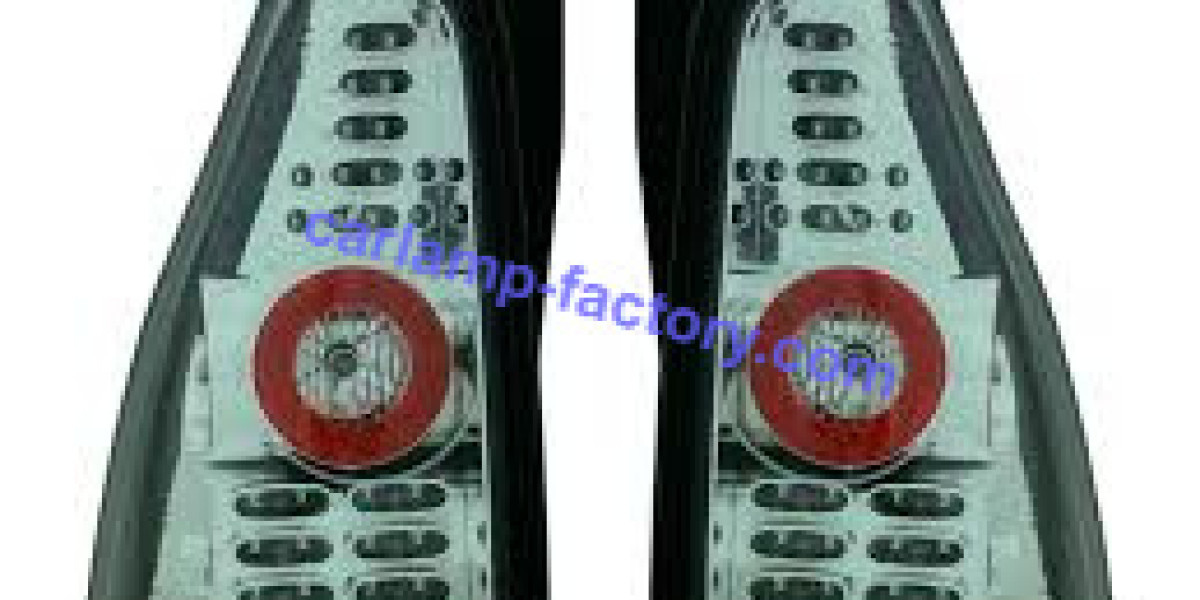

When examining customized automotive lighting, the first thing that often catches a buyer's attention is the relationship between the lamp's exterior shape and the surrounding bodywork. Smoked Led Tail Lights introduce a darkened visual treatment that changes how the rear lighting assembly appears when viewed against the vehicle's painted surfaces. The lens finish, internal arrangement, outer contour, and mounting position all contribute to the final appearance. A dark surface can give an assembly a different visual character without changing the basic role of the rear lamp, making the relationship between styling details and physical construction an important part of product development.
The lens is one of the first structural details worth examining. Its visible surface forms the exterior face of the lighting assembly, covering the internal components while defining the outline seen from behind the vehicle. A smoked appearance generally refers to a darker visual treatment of this surface, although the precise finish depends on the particular design. Some assemblies present a relatively uniform dark appearance, while others use visible internal divisions that create separate visual sections. Under daylight, the lens may appear like a dark panel integrated into the rear bodywork, while illuminated sections reveal the internal lighting arrangement through the exterior cover.
Shape is closely connected with the vehicle's original styling language. Rear lamps are rarely simple rectangular components because their outlines often follow the curvature of a trunk lid, quarter panel, tailgate, or bumper area. Designers consider the relationship between the inner edge and outer edge, along with the angle at which the assembly meets the surrounding panels. A lamp intended for a particular vehicle application needs to reflect these physical boundaries. When I examine a rear lamp sample on a workbench, I pay attention to the transition between its curved corners and flatter central surface, since these details become noticeable once the component sits against a painted body panel.
Proportion also affects the way a lighting assembly occupies the rear of a vehicle. A long horizontal outline can follow the visual direction of a trunk or tailgate, while a taller structure may occupy a vertical section near the outer body edge. Neither arrangement exists independently of the vehicle's overall design. The lamp's height, width, depth, and perimeter need to correspond with the available installation area. Even a small difference in the outer contour can create a visible gap or an uneven transition between neighboring surfaces. For customized production, dimensional drawings and reference photographs provide useful information about these boundaries.
The internal arrangement contributes to the exterior appearance as well. LED elements, reflectors, light guides, and decorative structures may sit behind the lens, forming the visual pattern visible when the assembly is operating. Some designs present distinct illuminated sections, while others use connected shapes or repeated elements to create a particular graphic effect. The spacing between these components influences the appearance of the finished unit, especially when viewed from directly behind or at an angle. Buyers discussing a customized design should distinguish between the appearance of the unlit assembly and the pattern produced when its lighting elements are activated.
Surface craftsmanship deserves attention around the perimeter and at the points where different housing sections meet. The exterior lens should follow the intended outline, while the surrounding housing supports the internal structure and installation arrangement. Molded edges, corner transitions, fastening areas, and joining surfaces all contribute to the physical finish. When handling a sample, I would look along the lens edge under workshop lighting, where uneven transitions and visible assembly marks can be easier to notice. The connection between the cover and housing is also part of the overall construction, rather than simply a hidden detail behind the vehicle.
Color coordination is another aspect of the visual design process. A dark lens can sit against black, white, silver, or colored body panels, and each combination creates a different visual relationship. The surrounding trim, bumper finish, and trunk surface influence how the lamp is perceived as part of the complete rear profile. Buyers may also need to distinguish between the exterior lens appearance and the color of internal components. These are separate design elements, and a dark outer surface does not automatically describe the appearance of every section behind it. Clear reference images help communicate the intended visual treatment during customization.
Vehicle-specific construction becomes especially relevant when the rear lighting assembly follows several connected body surfaces. A design may need to align with both the outer quarter panel and an inner trunk section, requiring careful attention to the relationship between separate mounting areas. BaoZhiWei's automotive lighting product range includes customized rear lamp applications, with its company information presented at https://www.carlamp-factory.com. In the design discussion for Smoked Led Tail Lights, the final visual arrangement remains tied to the selected vehicle reference, the curvature of its rear panels, and the precise boundary where the dark lens meets the surrounding bodywork.