
Understanding a 0.05 Blood Alcohol Level: Drinks, BAC, and Safety
Blood alcohol concentration (BAC) is an important measure of how alcohol affects the body. Even a relatively low BAC can influence concentration, judgment, coordination, and reaction time. Understanding how drinks contribute to BAC can help people make better-informed decisions about alcohol consumption and driving safety.
One common question is how many drinks it takes to reach a BAC of 0.05%. The answer is not the same for everyone. Alcohol strength, serving size, body weight, drinking speed, food intake, and individual metabolism all influence blood alcohol concentration. Therefore, drink counts should be treated as general information rather than reliable predictions of an individual's actual BAC.
What Does a BAC of 0.05% Mean?
A BAC of 0.05% means that there are approximately 0.05 grams of alcohol per 100 milliliters of blood. Although this number may appear small, alcohol can affect important mental and physical functions at relatively low concentrations.
Possible effects include reduced attention, changes in visual tracking, impaired coordination, and difficulty managing multiple tasks simultaneously. These changes can be particularly dangerous when driving, cycling in traffic, or operating machinery.
Importantly, people do not always recognize their own impairment. Someone may feel comfortable or confident while their reaction time and decision-making abilities have already declined.
BAC is also different from the percentage of alcohol listed on a beverage label. Alcohol by volume (ABV) measures the concentration of alcohol in a drink, while BAC describes alcohol concentration in the bloodstream. The two measurements serve different purposes.
0.05 Blood Alcohol: How Many Drinks?
The question of 0.05 blood alcohol how many drinks cannot be answered with one universal number. Some people may approach a particular BAC after consuming fewer drinks than others, while the same quantity of alcohol can produce different results under different circumstances.
Several variables influence BAC:
Body weight and composition: Alcohol is distributed through body water, so differences in body composition can affect blood alcohol concentration.
Alcohol strength: A beverage with a higher alcohol-by-volume percentage generally contains more alcohol in the same serving size.
Serving size: A large glass or bottle may contain more than one standard drink.
Drinking speed: Consuming several drinks quickly can cause BAC to rise more rapidly.
Food intake: Food may slow alcohol absorption, but it does not prevent intoxication.
Time: Alcohol can continue to be absorbed after the last drink, while the body eliminates alcohol gradually.
In the United States, one standard drink contains approximately 14 grams of pure alcohol. This is roughly equivalent to 12 ounces of regular beer at 5% ABV, 5 ounces of wine at 12% ABV, or 1.5 ounces of distilled spirits at 40% ABV. Actual servings may contain more or less alcohol depending on their size and strength.
These examples help explain why counting glasses, cans, or shots can be misleading. A large craft beer, a strong cocktail, or an oversized wine pour may contain multiple standard drinks even though it is served in a single container.
How to Estimate Blood Alcohol Concentration
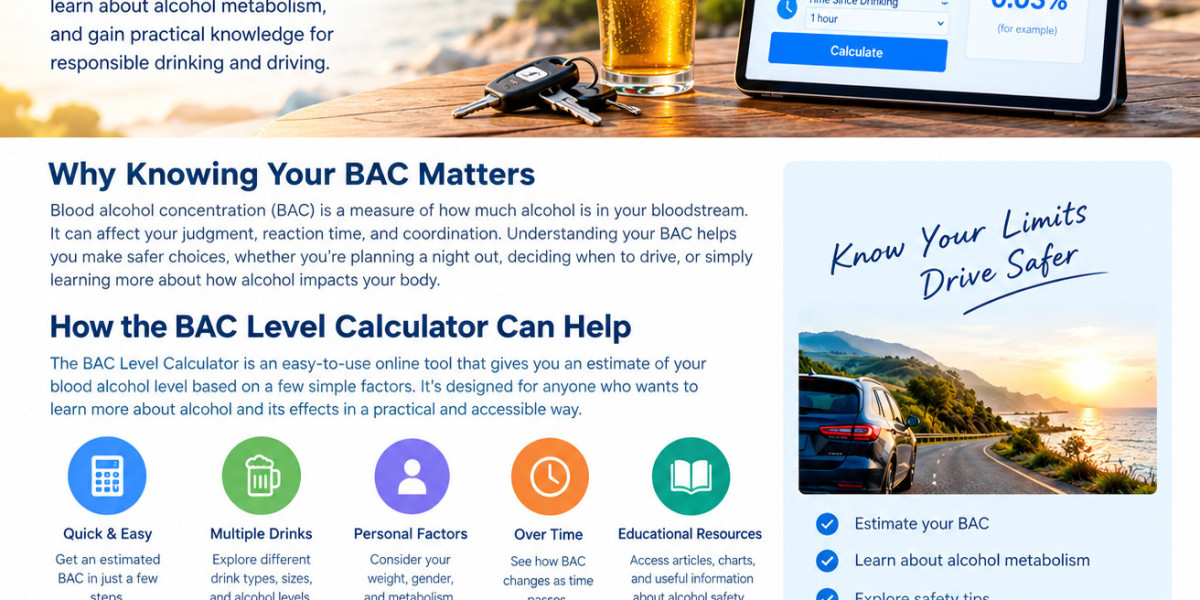
An online BAC calculator can provide an educational estimate using information such as body weight, the type and amount of alcohol consumed, and the duration of drinking. Such a tool can help people understand how alcohol intake and time may influence an estimated BAC.
For example, someone who wants to understand how multiple beers can affect alcohol concentration may explore an alcohol blood level calculator as a practical illustration of how drink quantity relates to BAC.
However, estimates have important limitations. Calculators may use simplified mathematical formulas and cannot account perfectly for individual physiology, exact serving sizes, absorption patterns, or every factor affecting metabolism. Their results should not be interpreted as measured BAC values.
A breathalyzer or appropriate blood test can provide a more direct assessment of alcohol concentration, although testing methods and circumstances can affect results. Even a measured BAC should be interpreted in the context of applicable laws and safety considerations.
Does a BAC of 0.05% Mean It Is Safe to Drive?
No. A numerical BAC threshold should not be confused with a guarantee of safe driving.
Alcohol can affect attention, reaction time, visual processing, and the ability to respond to unexpected hazards. These abilities are essential when navigating intersections, responding to sudden braking, or recognizing pedestrians and cyclists.
Legal thresholds also vary by jurisdiction and driver category. In the United States, Utah generally applies a 0.05% limit to most adult noncommercial drivers, while most other states use 0.08% for that category. Stricter rules may apply to commercial drivers and drivers under 21.
Even where a BAC of 0.05% is below the general legal limit, impairment may still be present. Laws differ, and being below a statutory threshold does not establish that a person is safe to operate a vehicle.
The safest approach is to avoid driving after consuming alcohol. Consider arranging a designated driver, using public transportation, booking a rideshare, or staying somewhere safe instead.
Can You Lower BAC Quickly?
There is no reliable shortcut for rapidly eliminating alcohol from the body. The liver processes alcohol over time, and the rate varies among individuals.
Coffee may make someone feel more alert, but it does not remove alcohol from the bloodstream. Cold showers, exercise, and drinking water do not reliably accelerate alcohol metabolism either. Water may help with hydration, but it does not make an intoxicated person sober.
Eating before or during drinking may slow alcohol absorption, but it cannot reverse the effects of alcohol already absorbed. Likewise, feeling less intoxicated after resting does not prove that BAC has returned to zero.
For these reasons, avoid using a drink-count calculation or an estimated time to sobriety as permission to drive.
Practical Ways to Make Informed Decisions
People can reduce uncertainty by checking beverage labels, understanding standard drink sizes, and keeping track of how much alcohol they consume. It is also important to recognize that cocktails and large servings may contain more alcohol than expected.
If you choose to drink, plan transportation before drinking begins. Do not rely on subjective feelings, a BAC estimate, or a legal threshold to decide whether to drive.