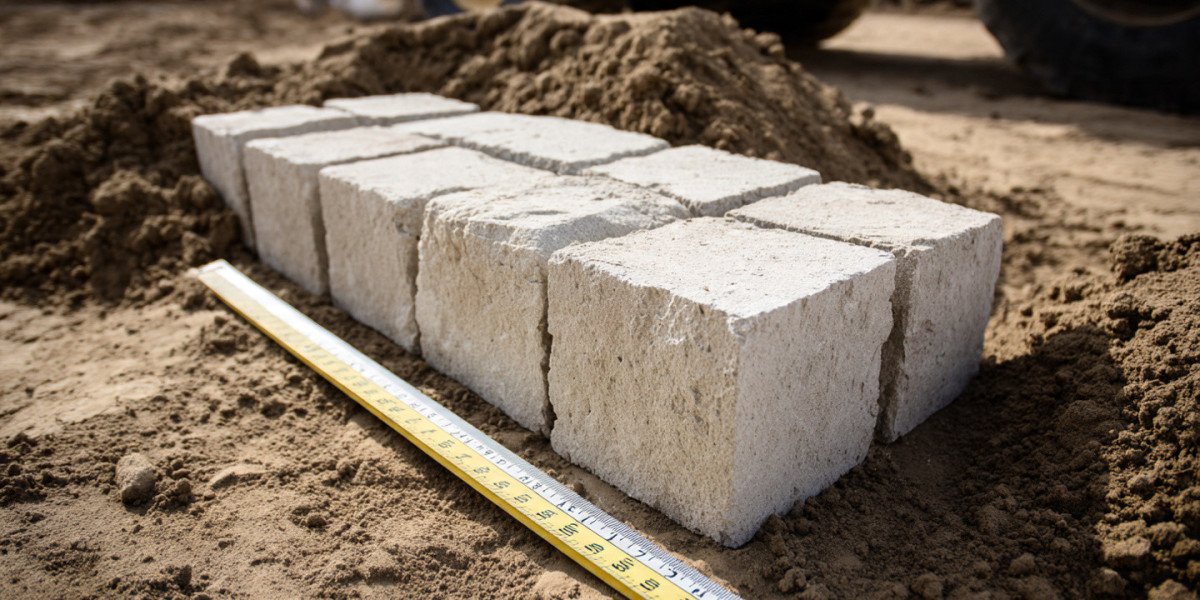

Before ordering concrete for a driveway, mulch for a garden bed, gravel for a pathway, or topsoil for a lawn, you need to know exactly how many cubic yards of material to buy. Order too little and your project stalls. Order too much and you waste money on material you cannot return. Our Cubic Yard Calculator gives you a precise volume estimate in seconds — just enter your length, width, and depth.
Use our free online calculators:
What Is a Cubic Yard?
A cubic yard is a unit of volume used primarily in the United States for construction and landscaping. It represents the space inside a perfect cube that measures 3 feet wide, 3 feet deep, and 3 feet tall. Since 3 x 3 x 3 = 27, one cubic yard equals exactly 27 cubic feet.
Visual Reference: Picture a large front-load washing machine or a standard bathtub. A cubic yard is roughly that size — large enough to hold about 200 gallons of material. A typical concrete truck delivers between 8 and 10 cubic yards per load.
When a landscaping supplier or concrete company asks "How many yards do you need?", they are asking for cubic yards — not linear yards or square yards. This is the standard unit used across the construction and landscaping industries in the US for bulk material orders including concrete, mulch, topsoil, gravel, sand, and fill dirt.
| Unit | Equivalent |
|---|---|
| 1 Cubic Yard | 27 cubic feet |
| 1 Cubic Yard | 46,656 cubic inches |
| 1 Cubic Yard | 0.7646 cubic meters |
| 1 Cubic Yard | About 202 US gallons |
| 27 Cubic Feet | 1 cubic yard |
| 1 Cubic Foot | 0.037 cubic yards |
Cubic Yard Formula
The formula to calculate cubic yards from measurements taken in feet is straightforward. You multiply the three dimensions together and divide by 27.
Cubic Yards = (Length ft x Width ft x Depth ft) / 27
Example: Length = 12 ft | Width = 6 ft | Depth = 6 inches (= 0.5 ft)
Volume = 12 x 6 x 0.5 = 36 cubic feet
36 / 27 = 1.33 cubic yards
Important: All three measurements must be in the same unit before you calculate. If your depth is in inches (which is common for shallow layers of mulch or gravel), divide by 12 first to convert to feet. For example, 4 inches = 4 / 12 = 0.333 feet.
Formula for Cylindrical Areas
Cubic Yards = (3.14159 x Radius ft x Radius ft x Depth ft) / 27
Example: Circular garden bed | Diameter = 10 ft (Radius = 5 ft) | Depth = 3 inches (= 0.25 ft)
Volume = 3.14159 x 5 x 5 x 0.25 = 19.63 cubic feet
19.63 / 27 = 0.73 cubic yards
Formula When You Know Square Footage
Cubic Yards = (Square Feet x Depth in inches) / 324
Example: Area = 200 sq ft | Depth = 3 inches
200 x 3 = 600 | 600 / 324 = 1.85 cubic yards
No matter which formula applies to your project, our Cubic Yard Calculator handles all the math automatically. Just enter your measurements and get an instant result.
How to Use a Cubic Yard Calculator – Step-by-Step
- Measure the lengthof the area you need to fill or cover, using feet or inches. For an irregular shape, measure the longest dimension.
- Measure the widthof the area. For a circular area, measure the diameter and divide by 2 to get the radius.
- Measure the depth— how thick or deep you want the material. This is often given in inches for mulch, gravel, or topsoil layers.
- Enter the valuesinto ourCubic Yard Calculator. The tool automatically converts inches to feet and applies the correct formula.
- Read your resultin cubic yards. Add 10–15% extra to your order to account for compaction, spillage, or uneven surfaces.
Worked Example – Concrete Driveway
You are pouring a new concrete driveway that is 20 feet long, 10 feet wide, and 4 inches thick. How many cubic yards of concrete do you need to order?
| Step | Calculation | Result |
|---|---|---|
| Convert depth to feet | 4 inches / 12 | 0.333 ft |
| Multiply dimensions | 20 x 10 x 0.333 | 66.6 cubic feet |
| Divide by 27 | 66.6 / 27 | 2.47 cubic yards |
| Add 10% buffer | 2.47 x 1.10 | 2.72 cubic yards |
You should order approximately 2.75 cubic yards of concrete — rounding up slightly to ensure you have enough for the full pour. Most concrete suppliers sell in quarter-yard or half-yard increments. Our Concrete Calculator provides even more detailed estimates including bags versus ready-mix quantities.
Coverage Chart – How Much Does 1 Cubic Yard Cover?
One of the most common questions before ordering bulk materials is: how much area will one cubic yard cover? The answer depends entirely on how deep you spread the material.
| Depth | Area Covered by 1 Cubic Yard |
|---|---|
| 1 inch | 324 square feet |
| 2 inches | 162 square feet |
| 3 inches | 108 square feet |
| 4 inches | 81 square feet |
| 6 inches | 54 square feet |
| 1 foot (12 inches) | 27 square feet |
| 2 feet (24 inches) | 13.5 square feet |
Formula behind the table: Coverage (sq ft) = 324 / Depth (inches)
To use this in reverse — finding how many cubic yards you need for a known area: Cubic Yards = (Area in sq ft x Depth in inches) / 324
Common Materials and Their Cubic Yard Weights
Different materials weigh differently per cubic yard. When ordering by weight (tons) rather than volume, knowing the approximate weight per cubic yard helps you convert accurately. Our Gravel Calculator and Mulch Calculator include material-specific weight conversions.
| Material | Weight per Cubic Yard | Typical Use |
|---|---|---|
| Concrete (wet mix) | 3,600 – 4,050 lbs (1.8–2 tons) | Driveways, slabs, foundations |
| Gravel (dry) | 2,700 – 3,000 lbs (1.35–1.5 tons) | Driveways, drainage, pathways |
| Sand (dry) | 2,600 – 2,900 lbs (1.3–1.45 tons) | Paving base, playgrounds, fill |
| Topsoil | 2,000 – 2,700 lbs (1–1.35 tons) | Lawns, gardens, raised beds |
| Mulch (wood chips) | 400 – 800 lbs (0.2–0.4 tons) | Garden beds, tree surrounds |
| Fill Dirt | 2,000 – 2,500 lbs (1–1.25 tons) | Grading, backfill, leveling |
| Crushed Stone | 2,500 – 2,700 lbs (1.25–1.35 tons) | Base layers, drainage |
| Compost | 1,000 – 1,600 lbs (0.5–0.8 tons) | Soil amendment, garden beds |
Real-World Project Uses for the Cubic Yard Calculator
Concrete Slabs and Driveways
Concrete is sold by the cubic yard from ready-mix suppliers. Ordering too little leaves gaps; ordering too much costs hundreds of dollars in wasted material. Accurate calculation is critical before scheduling a pour.
Mulch for Garden Beds
Landscapers recommend 2–3 inches of mulch for weed suppression and moisture retention. Most bulk mulch suppliers sell by the cubic yard. Calculate your garden bed area and depth to order the right amount.
Topsoil for Lawns
Reseeding a lawn or filling low spots requires a consistent layer of topsoil, typically 4–6 inches deep for new seeding. Measure the area in square feet and use the calculator to determine how many yards to order.
Gravel Driveways and Pathways
Gravel driveways typically require 4–6 inches of gravel for a solid base. Use our Gravel Calculator to estimate the cubic yards of crushed stone, pea gravel, or road base needed for your driveway or pathway.
Raised Garden Beds
Filling a raised garden bed with a soil and compost mix requires accurate volume estimates. For a bed that is 8 ft x 4 ft x 1 ft deep, you need about 1.19 cubic yards of material — without calculating, you risk buying too many or too few bags.
Pool Excavation and Fill Dirt
Contractors use cubic yards to calculate how much dirt must be excavated for a pool, basement, or foundation, and how much fill dirt is needed to backfill or level the surrounding area after construction.
How to Measure Irregular Areas
Not every project area is a perfect rectangle. Here is how to handle the most common irregular shapes.
L-Shaped Area
Split the L-shape into two separate rectangles. Calculate the cubic yards for each rectangle individually using the standard formula, then add the two results together for the total.
Circular or Round Area
Measure the diameter, divide by 2 to get the radius.
Cubic Yards = (3.14159 x Radius ft x Radius ft x Depth ft) / 27
Triangular Area
Cubic Yards = (0.5 x Base ft x Height ft x Depth ft) / 27
This is the same as calculating a rectangle and halving the result.
Trapezoidal Area
Area = ((Side A + Side B) / 2) x Height
Cubic Yards = (Area x Depth ft) / 27
Pro Tip: For very irregular areas (curved garden beds, odd-shaped patios), break the area into multiple simple shapes, calculate each one separately, and add the results. Always add a 10–15% buffer to account for edges, uneven ground, and material settling.
Converting Between Cubic Yards and Other Units
| From | To Cubic Yards | Multiply By |
|---|---|---|
| Cubic Feet | Cubic Yards | Divide by 27 |
| Cubic Inches | Cubic Yards | Divide by 46,656 |
| Cubic Meters | Cubic Yards | Multiply by 1.30795 |
| Cubic Yards | Cubic Feet | Multiply by 27 |
| Cubic Yards | Cubic Inches | Multiply by 46,656 |
| Cubic Yards | Cubic Meters | Multiply by 0.7646 |
| Cubic Yards | US Gallons | Multiply by 201.97 |
| Cubic Yards | Liters | Multiply by 764.6 |
How Many Bags to Buy Instead of Bulk?
For small projects, buying bagged material from a home improvement store may be more practical than ordering bulk by the cubic yard. Here is a comparison to help you decide.
| Bag Size | Cubic Feet per Bag | Bags Needed per Cubic Yard |
|---|---|---|
| 0.5 cubic foot bag | 0.5 cu ft | 54 bags |
| 1 cubic foot bag | 1.0 cu ft | 27 bags |
| 1.5 cubic foot bag | 1.5 cu ft | 18 bags |
| 2 cubic foot bag | 2.0 cu ft | 14 bags |
| 3 cubic foot bag | 3.0 cu ft | 9 bags |
Cost Comparison: For projects requiring more than 2–3 cubic yards, ordering in bulk from a landscape supplier is almost always cheaper per cubic yard than buying individual bags. For very small projects under 0.5 cubic yards, bagged material is more convenient and avoids minimum order fees.
How Much Extra Material Should You Order?
Experienced contractors and landscapers always add a buffer to their calculated volume. Here are the recommended overages by material type.
| Material | Recommended Buffer | Reason |
|---|---|---|
| Concrete | 5–10% | Waste during pour, uneven subbase, forms that are not perfectly level |
| Gravel / Crushed Stone | 10–15% | Compaction reduces volume by 15–20% after settling |
| Topsoil | 10–15% | Settling after watering, uneven ground, and minor waste |
| Mulch | 5–10% | Edges, irregular bed shapes, and minor spillage |
| Sand | 10% | Compaction and spillage during spreading |
| Fill Dirt | 15–20% | Significant compaction once soil is watered and packed |
Related Calculators
Frequently Asked Questions (FAQ)
There are exactly 27 cubic feet in one cubic yard. This is because one yard equals 3 feet, and a cube has three dimensions — so 3 x 3 x 3 = 27. To convert cubic feet to cubic yards, simply divide by 27. To convert cubic yards back to cubic feet, multiply by 27.
First convert all measurements to feet by dividing inches by 12. Then apply the formula: Cubic Yards = (Length ft x Width ft x Depth ft) / 27. For example, if your dimensions are 120 inches x 72 inches x 4 inches, convert to feet first: 10 ft x 6 ft x 0.333 ft = 19.98 cubic feet / 27 = 0.74 cubic yards. Our Cubic Yard Calculator handles the inch conversion automatically.
For a standard garden bed with 3 inches of mulch, use the formula: Cubic Yards = (Area in sq ft x 3) / 324. For a 200 sq ft garden bed at 3 inches deep, you need (200 x 3) / 324 = 1.85 cubic yards. For a 500 sq ft bed, you need about 4.6 cubic yards. Add 10% for edges and waste. Use our Mulch Calculator for a complete estimate.
A standard single-axle dump truck holds approximately 7–10 cubic yards of material. A larger tandem-axle or tri-axle dump truck can carry 14–16 cubic yards. The exact capacity depends on the truck model and the weight of the material being hauled, since many trucks have weight limits in addition to volume limits.
Ready-mix concrete typically costs between $120 and $200 per cubic yard depending on your location, the concrete mix design, and current material prices. Delivery fees, short-load charges (for less than a full truck), and pump rental can add $50–$200 or more to the total. Always get quotes from at least two or three suppliers and confirm current pricing before ordering.
A square yard measures area — a flat surface 3 feet x 3 feet = 9 square feet. It has two dimensions (length and width). A cubic yard measures volume — a three-dimensional space 3 feet x 3 feet x 3 feet = 27 cubic feet. It has three dimensions (length, width, and depth). When buying materials like mulch or concrete, you always need cubic yards because you are filling a three-dimensional space, not just covering a flat surface.
For a circular area such as a round flower bed or a circular concrete pad, use the formula: Cubic Yards = (3.14159 x Radius ft x Radius ft x Depth ft) / 27. To find the radius, measure the diameter (the full width across the circle) and divide by 2. Enter your values into our Cubic Yard Calculator and select the "circular" shape option for an instant result.
Several factors reduce the effective volume of material after delivery. Gravel and fill dirt compact significantly once spread and watered down, reducing volume by 15–20%. Concrete is lost to waste and overfill at edges. Mulch gets spread unevenly, with more needed at edges and corners. Adding a 10–15% buffer to your calculated volume prevents running short mid-project and avoids costly second deliveries.
Calculate Your Project Now
Whether you are pouring a concrete patio, spreading mulch in a garden bed, laying a gravel driveway, or filling raised planting beds, getting the cubic yard count right from the start saves time, money, and frustration. Use our free calculators for accurate estimates on every project.
Free calculators for your construction and landscaping projects: