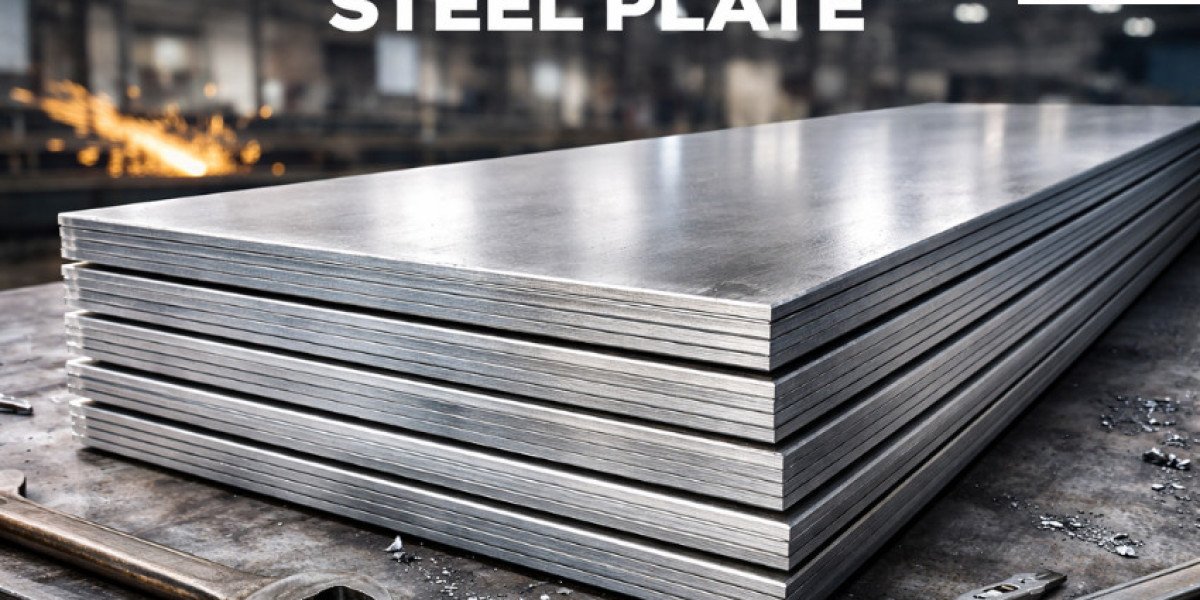

In 2026, Steel Plate Prices remain at the forefront of industrial commodity markets, reflecting broader economic health and the performance of key sectors such as construction, machinery manufacturing, heavy infrastructure, and energy. Steel plate, a fundamental structural input across multiple applications, is not only essential for basic fabrication and structural reinforcement but also serves as a key indicator of manufacturing demand cycles and supply-chain dynamics globally.
1. What Are Steel Plates and Why Their Pricing Matters
Steel plates are thick flat sheets of steel, typically ranging in thickness from a few millimeters to several centimeters, that are used across diverse heavy-duty applications. Common sectors consuming steel plates include:
Construction & Infrastructure: Structural beams, bridges, building frameworks.
Shipbuilding & Marine: Hull structures and reinforced assemblies.
Oil & Gas: Pressure vessels, offshore platforms, and storage tanks.
Heavy Machinery: Industrial equipment and OEM manufacturing.
Defense & Energy: Military vehicles, wind turbine foundations.
Because of this wide industrial relevance, Steel Plate Prices act as a barometer of broader economic activity and demand fundamentals. Price fluctuations can impact project costs, operating margins, procurement planning, and even national infrastructure budgets.
2. Latest Steel Plate Prices
Based on the latest available pricing data as of the quarter ending December 2025, the Steel Plate Price Market shows varied regional performance influenced by demand, supply, and inventory conditions:
North America
The Steel Plate Price Index in the USA decreased modestly by 0.5 % quarter-over-quarter in Q4 2025.
The average recorded Steel Plate price for the quarter was approximately USD 1,129.33 per metric ton.
Price dynamics were shaped by balanced seasonal buying, energy sector restocking, and limited construction offtake alongside inventories at the service-center level.
Production cost pressures from elevated scrap and iron ore contributed to sustains prices despite subdued demand.
APAC (Japan)
In Japan, the Steel Plate Price Index fell more sharply (around 8.89 % quarter-over-quarter).
Average APAC steel plate price settled near USD 605.00 per metric ton, subdued by weak construction and shipbuilding demand.
High service-centre inventories and softer export inquiries further weighed on pricing.
Europe (Germany)
European prices also retreated slightly (around 1.01 % quarter-over-quarter), with average prices around USD 781.00 per metric ton.
Energy costs and CO₂ compliance fees supported marginal production cost pressures, adding some floor to prices.
Regional demand remained muted, especially in construction, but importer restrictions and distributor inventory behaviors gave mixed pricing signals.
This regional overview highlights how Steel Plate Prices differ based on local demand cycles and freight, tariff, and inventory factors.
Track Real Time Prices of Steel Plate
https://www.chemanalyst.com/ChemAnalyst/PricingForm?Product=Steel%20Plate
3. Steel Plate Price Trends: Analysis of Recent Movements
Demand Cycles and Inventory Dynamics
Across regions, short-term shifts in demand — particularly from construction, infrastructure, and shipbuilding — have weighed heavily on prices. Elevated service-center inventories have inclined buyers toward a wait-and-see approach before procuring large volumes, muting Steel Plate Price Trends in some markets.
Seasonal slowdowns in construction frequently depress near-term buying.
Spot market volatility tends to ease when buyers destock or delay restocking amid uncertainties.
Raw Material and Cost Drivers
Raw materials — steel scrap, iron ore, coking coal, and slabs — are foundational inputs for plate production. Recent cost trends show rising input costs:
Elevated scrap and iron ore prices have tightened mill margins, prompting producers to maintain price offers at higher levels despite weak downstream demand.
Energy costs, especially in Europe where electricity and carbon compliance fees are significant, add to production cost pressures, stabilizing prices even with weaker demand.
These cost drivers often underpin underlying price levels and create support even amid muted order books.
Trade and Tariff Influences
Policy and trade measures often reshape market behavior:
In some markets, tariff barriers or import quotas have limited low-cost import competition, giving domestic mills more pricing power. Conversely, import surges can depress prices if supply flows overwhelm local demand.
Recent global trade policy measures have occasionally redirected steel flows, impacting pricing behavior in specific regions.
Macro-Economic Indicators
Steel plate demand and pricing also mirror wider macroeconomic sentiment. When manufacturing activity contracts or construction projects face delays, price growth slows. Conversely, robust industrial activity supports stronger pricing cycles. Pending infrastructure projects, government budgets, and investment flows all influence derived demand.
4. Market Drivers Shaping Steel Plate Price Market in 2026
Infrastructure and Construction Sector
Construction demand remains a cornerstone driver of steel plate consumption. Many national economies, particularly in Asia and developing regions, are accelerating infrastructure spending. Expected sustained growth in road, rail, and housing projects supports underlying demand for structural steel plates.
India’s projected 8–9 % steel demand growth in 2026, driven by infrastructure and housing projects, underscores this trend.
Energy and Heavy Industries
Orders from energy sectors — such as fossil fuel platforms, wind and solar foundations, and pipeline construction — underpin plate demand. Machinery and heavy engineering also contribute stable demand streams.
Even in advanced economies facing slower overall growth, specialized demand from heavy industries can temper price softening.
Global Trade Patterns
Shifts in export and import flows — influenced by tariff policies, trade agreements, and protection measures — directly affect the Steel Plate Price Market by altering regional supply balances. For example, safeguard duties on steel imports in India have elevated local steel prices, affecting procurement behaviors.
Industrial Scrap and Feedstock Availability
Availability and cost of industrial scrap — a principal input for electric-arc furnace (EAF) steelmaking — influence plate prices. Constraints in scrap supply or rising scrap costs often transmit into steel plate offers, supporting pricing amid weak downstream demand.
5. Forecast Outlook: Steel Plate Prices in 2026
As the steel plate market progresses through 2026, price trajectories are expected to hinge on a blend of demand and supply variables:
Short-Term Expectations
Ongoing demand from infrastructure and durable goods sectors may stabilize prices, especially as service centers begin replenishing inventories after prolonged destocking phases.
Seasonal demand cycles, particularly early-year infrastructure bid activity, could provide transient price upticks.
Medium-Term Outlook
For mid-to-late 2026, moderate price growth is plausible if construction and energy sectors gain stronger momentum.
Cost pressures from raw materials, including scrap, iron ore, and energy, may restrain downward price risks even if demand growth is uneven.
Longer Horizon Scenarios
While market dynamics are always uncertain, several broader themes could shape price behavior:
Green Steel & Environmental Standards: Shifts toward low-carbon steelmaking and EAF expansions may influence supply costs and regional price patterning.
Global Manufacturing Cycles: Changes in global manufacturing activity — including automotive production and heavy equipment cycles — could introduce volatility into steel plate pricing.
Overall, while Steel Plate Prices may not exhibit dramatic swings, moderate volatility and region-specific price behavior are likely through 2026.
6. Impact of Price Movements on Industries and Supply Chains
Manufacturing and Construction Costs
Changes in steel plate prices directly affect project budgets in construction and industrial fabrication. Higher plate prices can increase the capital cost of bridges, facilities, and infrastructure projects, while softening prices can improve cost competitiveness.
Recent local price hikes — such as 20 % increases in TMT steel prices in parts of India — have materially impacted construction costs and project viability.
Profit Margins in Heavy Industries
Steel plate pricing impacts manufacturer margins. When plate prices increase faster than input cost movement, steel producers can see improved earnings, while downstream fabricators may face margin pressures if final product pricing is constrained.
Trade Balances and Global Supply Flows
Regions with net exports of steel plate benefit from stronger pricing power, while import-dependent markets are more vulnerable to global price shifts. Trade policies, tariff adjustments, and supply chain bottlenecks therefore play major roles in shaping regional price behavior.
7. Challenges and Uncertainties in the Steel Plate Price Market
Raw Material Price Volatility
Price volatility in key inputs — iron ore, coking coal, and scrap — can introduce uncertainty into steel plate pricing. Sudden supply disruptions or demand spikes in downstream sectors can translate into short-term price movements.
Economic Slowdowns and Demand Softening
Should global economic growth decelerate, demand for steel plate in key sectors such as construction and automotive could slow, dampening pricing momentum.
Trade Policy and Geopolitical Risks
Geopolitical tensions or sudden trade policy shifts can reshape regional supply flows, influencing prices. Protective tariffs or import restrictions can tighten local supply and support higher pricing, while import surges can introduce downward pressure.
Conclusion
In 2026, Steel Plate Prices are shaped by a complex interplay of demand cycles, raw material cost drivers, trade dynamics, and macroeconomic conditions. Latest pricing data indicate modest regional variations — with North America showing mild softening, APAC prices under pressure due to subdued demand, and Europe reflecting muted trends amid energy cost pressures.
Looking ahead, Steel Plate Price Trends suggest that pricing will likely be influenced by infrastructure activity, heavy industry demand, and feedstock cost evolution. Despite potential volatility, medium-term forecasts point to moderate stability or mild growth in prices as demand from construction and energy sectors strengthens.
For buyers, producers, and traders, monitoring evolving Steel Plate Price Market signals — including inventory levels, raw material cost shifts, and policy landscapes — will be vital for strategic planning and cost management through the rest of 2026 and beyond.