
In modern industry, machines are expected to run faster, longer, and under heavier loads than ever before. Standard bearings often struggle in these conditions. Excessive heat, vibration, and premature wear can lead to sudden failures that stop production lines.
The Hidden Cost of Downtime
When a bearing fails, the impact goes beyond replacement cost:
Production delays and missed deadlines
Increased maintenance labor
Damage to shafts, housings, and surrounding parts
Reduced overall machine lifespan
For manufacturers, reliability is critical to maintaining output and profit.
The Solution: What Is an Angular Contact Bearing?
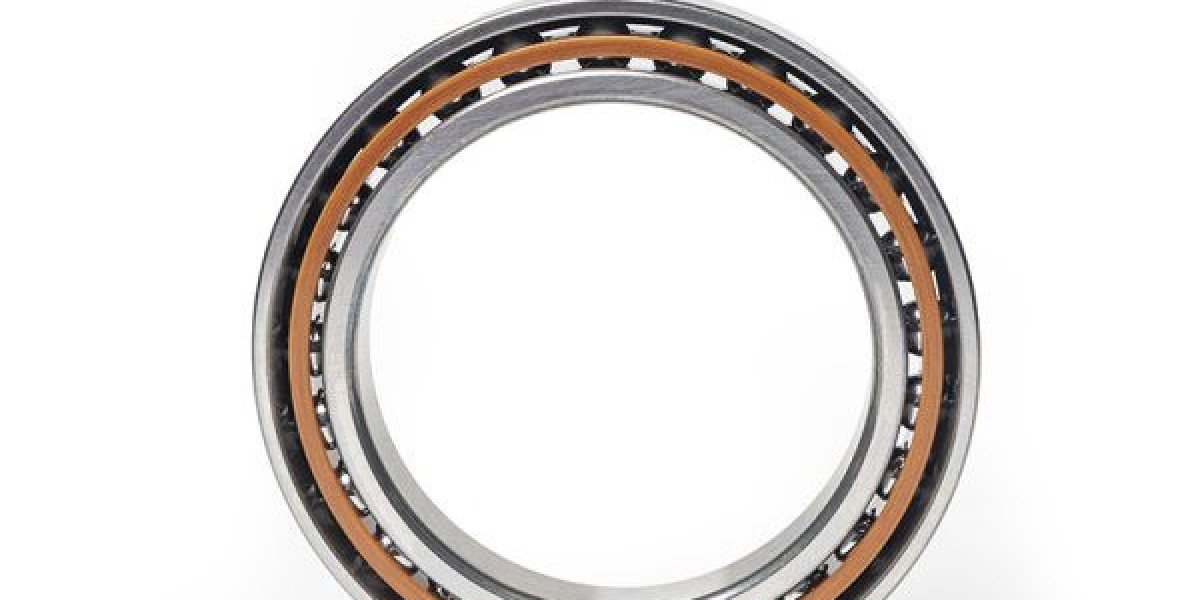
An angular contact bearing is designed to handle both radial loads (side pressure) and axial loads (thrust) at the same time. Unlike standard ball bearings, these bearings have raceways positioned at a specific contact angle.
How It Works Under Combined Loads
The contact angle allows forces to be distributed more efficiently between the balls and raceways. This design reduces stress concentration and improves performance under high-speed and high-load conditions.
Because the load path is optimized, friction and heat generation are reduced, which increases bearing life.
Problems with Traditional Bearing Designs
Standard deep groove ball bearings work well for light to moderate radial loads. However, they have limitations:
Poor performance under axial loads
Increased vibration at high speeds
Heat buildup due to uneven load distribution
Shorter service life in demanding environments
These weaknesses often lead to frequent replacements and unexpected downtime.
How Angular Contact Bearings Solve These Issues
Optimized Contact Angle Design
The angled raceways allow the bearing to support combined loads efficiently. This makes them ideal for applications where axial and radial forces act together, such as in pumps and gearboxes.
High-Speed Stability and Heat Control
Angular contact bearings are built for high rotational accuracy. Their design reduces internal friction, allowing smoother rotation and lower operating temperatures. This is essential for machines running at high RPM.
Key Features That Matter to Engineers
Engineers choose angular contact bearing solutions because they offer:
High load-carrying capacity
Excellent high-speed performance
Reduced vibration and noise
Improved thermal stability
Longer operating life
Options for single or paired mounting
These features help ensure reliable and efficient machine performance.
Comparison: Standard Ball Bearings vs Angular Contact Bearings
| Feature | Standard Ball Bearing | Angular Contact Bearing |
|---|---|---|
| Load Type | Mainly radial | Radial + axial combined |
| High-Speed Performance | Moderate | Excellent |
| Heat Generation | Higher at speed | Lower due to optimized design |
| Axial Load Handling | Limited | Strong support |
| Service Life in Heavy Use | Shorter | Longer |
| Precision Applications | Basic | High precision |
Real Industrial Applications
Angular contact bearings are widely used in industries where performance and reliability are essential:
CNC machine tool spindles
Industrial pumps and compressors
Gearboxes and transmissions
Electric motors
Robotics and automation systems
In these applications, equipment must run smoothly under both speed and load.
Why Manufacturers Prefer Angular Contact Bearings
Manufacturers value bearings that reduce downtime and maintenance costs. Angular contact bearings improve:
Equipment reliability
Energy efficiency due to lower friction
Operational stability at high speeds
Production consistency
This leads to fewer unexpected breakdowns and better long-term return on investment.
How to Choose the Right Angular Contact Bearing
When selecting a bearing, consider:
Required contact angle for your load type
Operating speed and temperature
Precision class needed for your application
Mounting arrangement (single, paired, or set)
Lubrication and sealing requirements
Correct selection ensures maximum performance and durability.
Conclusion
High-speed and high-load machines demand more than standard bearing solutions. Angular contact bearings provide the strength, stability, and precision needed to keep modern industrial equipment running reliably. Choosing the right bearing design today prevents costly failures tomorrow.