
A growing business can outgrow its software quietly. Pages slow during busy periods, releases become risky, and customers lose patience during outages. The problem is often an architecture that cannot adapt as demand and expectations change. Well planned cloud application development services help businesses build dependable systems without making every improvement a costly project. The goal is not to follow a trend, but to make digital products secure and easier to improve.
What Cloud Native Really Means
Cloud native is software which is developed and runs within a cloud. Components in a cloud native architecture are described as secure, robust, controllable and trackable by the Cloud Native Computing Foundation. Popular technologies used are containers, microservices, service mesh, serverless and declarative APIs. However, not all of these will always be appropriate. Even a small business may require just a good quality application and database rather than many microservices. Advantages of cloud software development include elasticity which facilitates both evolving and repairing software. However, again, cloud native doesn’t inherently equate to lower cost or speed. Poorly structured software can lead to greater expenditure together with increased alerting and support requirements. Firstly establish the business goal and then choose technologies which effectively address particular challenges.
Useful Technologies
Applications can be bundled with their relevant libraries and environment using containers. Docker is used for creating container images. Kubernetes controls and arranges containers. It also enables progressive replacement of existing containers (rolling update) and can even revert to a previous release if needed. Whilst a containerised structure is good for enabling reproducibility, resources, health and ownership still all need to be controlled. Microservices divide an application into distinct services which can be deployed individually. For example, an ecommerce site may have dedicated services for catalogue, ordering, payment and messaging so that just one part can be evolved. Yet each service requires additional networking, tracking and repair functionality. Microservice development is especially suitable where defined demarcations exist. Alternatively, a ‘smart’ monolith could prove a more straightforward solution for initial product development.
Managed services (such as databases, objects, message queues and serverless functions) lessen the burden of managing technology. Message queues can buffer workloads and also enable background processes to be undertaken independently from those directly involving customers. Serverless functions are good for handling events but do involve constraints on function execution plus dependence on a particular vendor. Services should be chosen according to factors including data sensitivity, speed, transferability and availability in different areas. Cost is also important.
Good Practice for Effective Software Delivery
Well structured cloud software starts with requirements which can be tested. Identify anticipated workload volumes, speeds required, repair requirements, data storage and compliance requirements. Convert these into quantifiable points. Rather than merely stating that an application should be quick, for example, specify the required speed for a key customer process. Infrastructure as code is used to control networks, databases and computer processing. Alterations are analysed via a pull request mechanism. Staging environments are used for testing. Continuous integration and delivery then enables automatic testing, analysis of dependencies and authorised releases. Standardised deployment procedures ensure that production releases are not dependent upon individual staff members’ knowledge.
Security should be integral to a software system. Follow the principle of least privilege. Incorporate multi factor authentication. Protect data using encryption and manage secrets. Regularly update software and collate centralised logs. Distinguish between development and live environment logins. Threat modelling should analyse the risks associated with re settlement, payments and personal data access. Only perform data backups where there are also tested restoration arrangements. Specify who is accountable for various aspects and establish protocols for informing customers. Observability converts unknowns into knowables. Metrics, logs and distributed tracing are analysed to trace processes across different services. As well as analysing central computer processing statistics, it is important to observe order completion, speeds and error rates. According to Google’s Site Reliability Engineering guidance, observability enables staff to recognise, analyse and analyse trends in relation to problems. Establish service level goals for key customer processes. Also determine alerting so that remedial action can be taken.
Scaling Without Losing Control
Scalable cloud software must include provisions for fluctuating workloads. Auto scaling can be utilized for variable workloads. Data which is commonly requested can be cached (where this is permissible) and rates can also be restricted. Preemptive load testing should be performed for key customer processes around peak times. External services such as payment and identity verification must also be considered when calculating capacity as these too can experience issues. Continually manage costs. Add tags to resources. Establish spending limits and alerts. Analyse and control data storage. And discontinue under used resources. Weigh up the ease of managed services against longer term expenses. Assess services on reliability, security, speed, capability and environmental impact. The AWS Well Architected principles provide a structure to analyse these areas and consider associated compromises.
A Practical Example and Lessons
Using a retail business for example, during peak periods there can be poor performance in a businesses ordering function. Employees investigate how customers interact within a business and recognise that image viewing, product investigation and payment are all competing for resources. Images are stored within object storage and then delivered using a content delivery network. Low priority communication is added to a message queue. Separately, ordering functionality is also scaled. There is payment monitoring and simulated maintenance and database recovery. Performance can then be analysed using data concerning order fulfilment, speed, failed payments and unit price. So long as performance is improved and security preserved value is therefore being created. If however costs are rising and customers are not gaining value, optimisation should be undertaken. This approach to cloud automation avoids extra complexity which could purely result from attempting to adhere to current trends.
When investigating, look into the individuals that utilise software. Members of support, sales, finance and operations will each hold different opinions regarding problems. Recognising these various viewpoints allows for a distributed application to be organised so that it addresses real issues. Costly redevelopment can be avoided by facilitating an easier method of integration or workflow amendment in order to rectify problems. Despite the wide variety of managed functions now offered by cloud environments, cloud providers should specify details such as data storage location, methods of data exportation, system capacity and who offers support. For growing organisations, cloud software is best developed by those who convey information clearly. This guarantees realistic costing and allows management to be aware of spending. Software development for the cloud is thus key.
Choosing a Development Partner
Prior to engaging with a developer, ascertain how they will analyse business processes and assess success. Obtain details of their architectural approach, future direction, security provision, testing and post launch ownership. Further, identify who will oversee observation, backup, issues, updates and cloud expenditure. A trustworthy developer will analyse compromises rather than guarantee infinite scalability and 100% uptime. Quality cloud software development encompasses discovery, architecture, development, transfer, testing, deployment, and evolution. Ensure that source code, infrastructure accounts and login details together with supporting documentation are all available within your organisation. Before starting work, agree service standards and lines of communication. An appropriate developer will further develop staff capability.
Final Thoughts: Build for the Business You Want Next
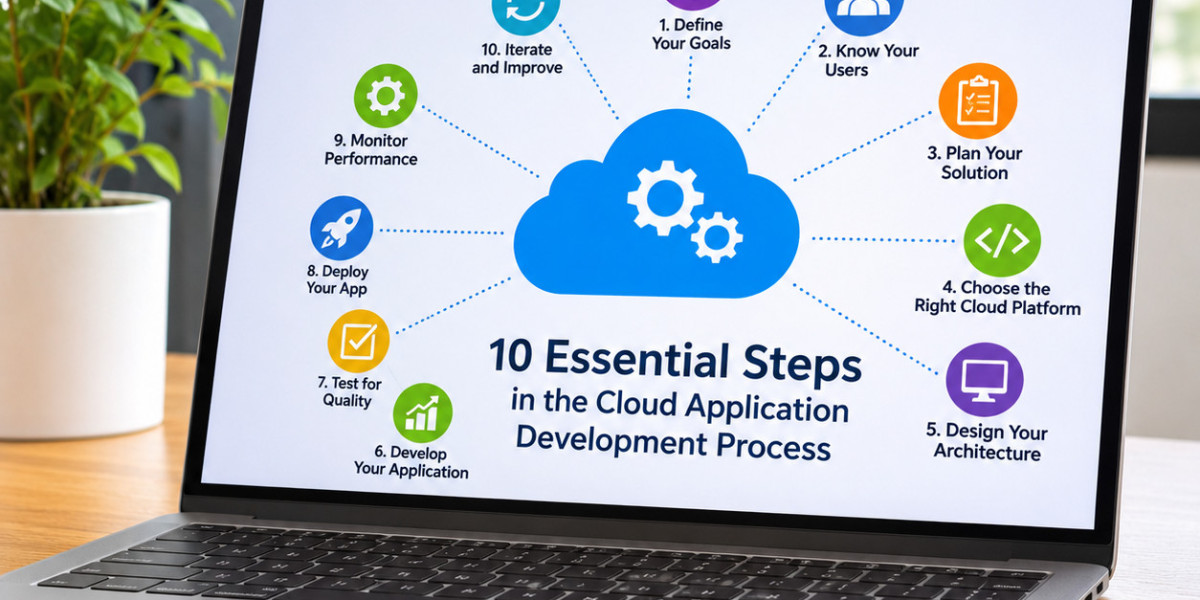
Whilst there are many benefits to using cloud based solutions, it is the software that allows customers to do something and that users can trust that is of the greatest benefit. Firstly identify a complex business function and review and then work on its main limitation. Requirements could include packaging, enhanced testing and control of a database together with increased security for releases.
Ensure that the cloud software being reviewed works to positively deal with genuine issues and provides real business benefits. Look for well defined service provision, security, repair processes and monitoring and transparent charging. Formulate a flexible, well thought out vision for the future of technology which evolves alongside the business. Learn from existing situations and utilise customer results to shape technology.
Make Your Cloud Native Vision Work with The Custom Websites
A powerful cloud native application should grow with your business, handle unexpected demand, and deliver a smooth experience without unnecessary technical complications. That is where the right development expertise makes a difference. The Custom Websites helps businesses turn ambitious application ideas into practical cloud powered solutions with a focus on flexibility, performance, and dependable architecture. We look beyond development to understand how your application will operate, evolve, and serve customers over time. Instead of building for today's requirements alone, we help create a foundation that can support tomorrow's opportunities. Give your next application project a smarter direction with The Custom Websites.