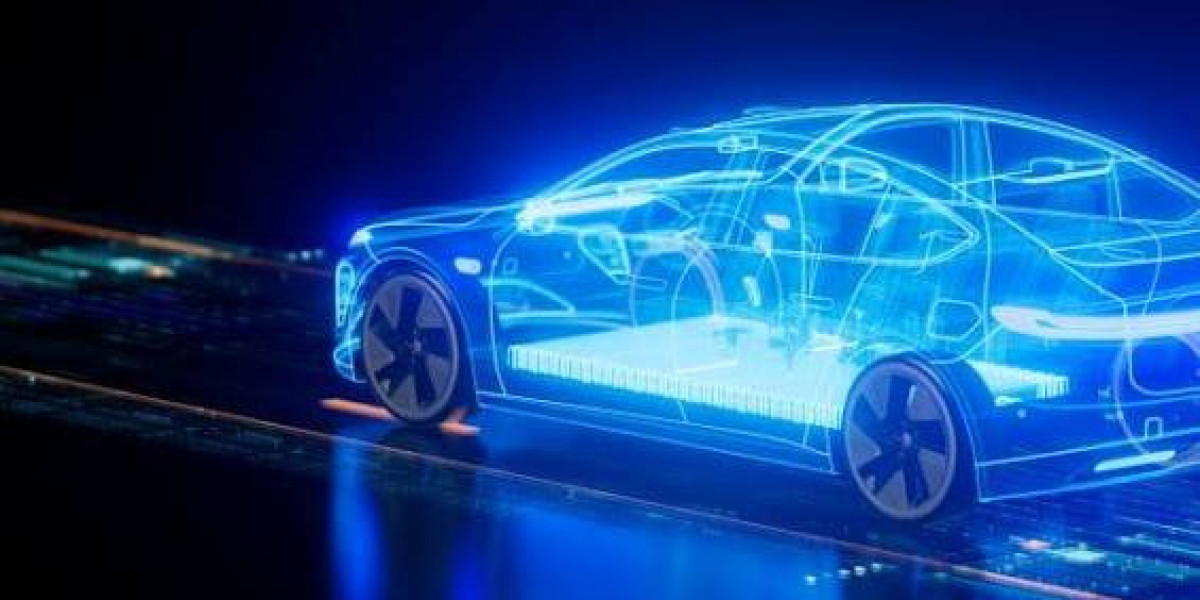

The automotive industry is entering a new era where intelligent sensing technologies are becoming as important as engine performance or vehicle design. Among these innovations, Automotive LiDAR (Light Detection and Ranging) has emerged as a key technology supporting safer driving, advanced driver assistance systems (ADAS), and the gradual transition toward autonomous mobility. By generating highly detailed three-dimensional maps of a vehicle’s surroundings, LiDAR enables faster and more accurate environmental awareness, helping vehicles respond to changing road conditions with greater precision.
As automakers continue investing in software-defined vehicles and intelligent safety systems, demand for advanced sensing technologies is increasing across both passenger and commercial vehicles. An industry assessment published by Markntel Advisor highlights that innovation in autonomous driving, along with the rising adoption of electric vehicles, continues to strengthen the outlook for advanced vehicle sensing technologies. Since the report's forecast period is 2025–2030, no numerical market values have been included here in accordance with the provided content guidelines.
Unlike conventional cameras that rely heavily on ambient lighting, LiDAR uses laser pulses to calculate the distance and position of surrounding objects. This capability allows vehicles to identify pedestrians, cyclists, road barriers, and other automobiles with exceptional spatial accuracy. As manufacturers pursue higher levels of vehicle automation, LiDAR is increasingly being viewed as an important complement to radar, cameras, and ultrasonic sensors.
Why LiDAR Matters for Modern Vehicles
Vehicle safety expectations continue to evolve alongside stricter regulations and growing consumer awareness. Modern vehicles are expected not only to protect occupants during accidents but also to actively prevent collisions before they occur. LiDAR supports this objective by delivering high-resolution environmental mapping that improves obstacle detection, lane recognition, and object classification.
Because LiDAR provides accurate depth perception, it strengthens several intelligent driving functions, including automatic emergency braking, adaptive cruise control, collision avoidance, lane-centering assistance, and highway driving support. These capabilities contribute to safer driving experiences while improving confidence in semi-autonomous vehicle technologies.
Advancements in Solid-State LiDAR
One of the most significant developments in recent years has been the evolution from traditional mechanical LiDAR systems to solid-state LiDAR. Mechanical units offered excellent performance but were often larger, more expensive, and contained moving components that limited long-term durability.
Solid-state designs reduce mechanical complexity while improving reliability, lowering manufacturing costs, and simplifying integration into vehicle body structures. Their compact size allows automakers to install sensors within bumpers, grilles, headlights, or rooflines without significantly affecting vehicle aesthetics. Continuous engineering improvements are making these solutions increasingly practical for large-scale automotive production.
Supporting the Future of Autonomous Driving
Autonomous driving depends on accurate environmental perception. While cameras recognize colors and road signs and radar measures speed and distance, LiDAR adds precise three-dimensional spatial awareness that helps vehicles understand complex surroundings.
This combination of complementary sensing technologies enables more reliable decision-making during challenging driving situations, including dense urban traffic, intersections, and low-light environments. Research continues to demonstrate the value of LiDAR within multi-sensor perception systems designed for advanced autonomous driving applications.
Electric Vehicles Create New Opportunities
The rapid expansion of electric vehicles is creating additional opportunities for LiDAR deployment. Many premium EV manufacturers are positioning advanced driver assistance as a major product differentiator, leading to greater integration of intelligent perception systems.
As software-defined vehicles receive regular over-the-air updates, LiDAR-equipped platforms can continuously improve driving capabilities through enhanced perception algorithms, machine learning models, and sensor fusion technologies. This flexibility supports future feature upgrades without requiring major hardware redesigns.
Industry Innovation Continues to Accelerate
Global automotive manufacturers and technology suppliers continue investing heavily in LiDAR development. Recent collaborations between vehicle manufacturers and LiDAR companies illustrate the industry's commitment to improving sensor performance, lowering production costs, and expanding commercial deployment across future vehicle platforms.
Challenges That Still Remain
Despite rapid technological progress, several challenges remain before LiDAR achieves widespread adoption across all vehicle segments. System costs, manufacturing scalability, weather performance, software integration, and functional safety validation continue to require ongoing research and development.
Automakers must also balance sensor performance with affordability, ensuring advanced safety technologies become accessible beyond premium vehicle categories. Continued improvements in semiconductor technology, artificial intelligence, and production efficiency are expected to gradually address many of these challenges over time.
Conclusion
Automotive LiDAR is becoming an increasingly important component of intelligent mobility by enhancing vehicle perception, improving road safety, and supporting the development of advanced driver assistance and autonomous driving technologies. As innovation continues across sensing hardware, artificial intelligence, and software-defined vehicle architectures, LiDAR is expected to play a growing role in shaping the next generation of connected and autonomous transportation. Rather than serving as a standalone solution, it is evolving into a critical part of an integrated sensor ecosystem that enables safer, smarter, and more reliable mobility.









