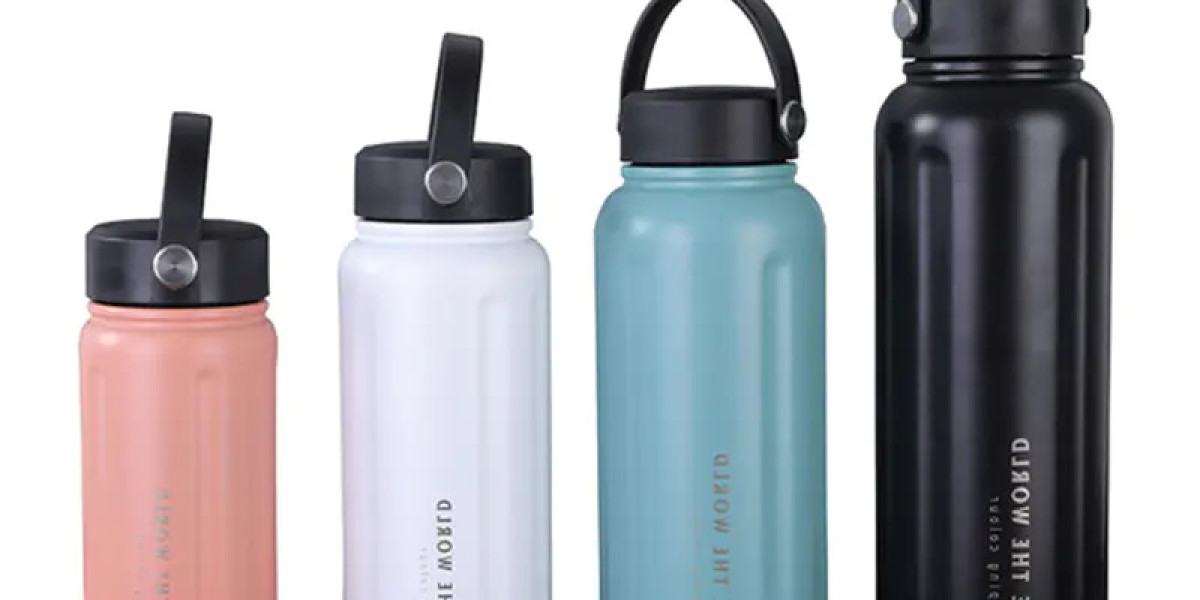

People often describe a vacuum flask as a bottle that keeps a drink hot or cold, but the principle behind that function is a matter of controlling heat transfer. A Stainless Steel Vacuum Thermos combines stainless steel construction with vacuum insulation, creating a container designed to slow the movement of thermal energy between its contents and the surrounding environment. The metal provides the physical body, while the insulated space plays a separate role. Understanding how these parts work together makes the product's central function easier to understand.
Heat naturally moves from a warmer area toward a cooler one through conduction, convection, and radiation. A conventional container allows these processes to take place through its walls and the air around it. Vacuum insulation addresses two of these pathways by placing an evacuated space between inner and outer walls. With very little gas in that space, there are fewer particles available to transfer thermal energy through conduction or convection. This does not stop every form of heat movement, since radiation can still pass across the gap, but it changes how energy travels through the container.
The double-wall arrangement gives the flask its basic insulated structure. An inner wall holds the beverage, while an outer wall forms the external shell. The space between them is evacuated during manufacture, rather than left as an ordinary air-filled cavity. This distinction matters because air can carry heat through movement and particle contact. Removing most of the air reduces those transfer routes. The two metal walls remain connected at certain structural points, so some heat conduction is still possible there. The finished design therefore manages heat flow rather than creating a completely isolated environment.
Stainless steel serves as the material for the container body, giving the inner and outer sections a rigid metal structure. Its role should be considered separately from that of the vacuum gap: the steel forms the surfaces that contain and protect the beverage, while the evacuated space provides the insulation principle. The inner surface is in contact with the liquid, so its condition and shape are relevant to everyday use. The outside shell is the part handled when the flask is lifted, carried, or placed on a table. These components work as one vessel, although each has a different task.
At YuNeng, the company history records a founding year of 1999 and describes work covering research and development, production, and global export of insulated cups, bottles, and pots. Those activities involve the manufacturing process behind this type of drinkware, where the metal body and insulated cavity have to be treated as parts of a single assembly. The vacuum space is not visible during ordinary use, yet it is central to the product's thermal function. Its formation is a manufacturing operation, not a feature that can be judged simply by looking at the exterior finish.
The lid and opening also affect how a vacuum flask behaves. When a container is opened, warm air can leave a hot beverage and cooler surrounding air can enter the space above the liquid. Replacing the lid limits this exchange, although the closure itself is not the same thing as the vacuum insulation between the walls. The mouth of the vessel must also allow liquid to be poured or consumed. These practical openings create a point where heat can move, which is why the complete container includes both an insulated body and a closure designed for its opening.
Temperature retention changes over time because the contents and the surrounding environment continue exchanging energy through the available pathways. A hot drink gradually loses heat, while a chilled drink gradually gains heat from warmer surroundings. The rate depends on the container's construction and conditions during use, including how often the lid is removed. Filling the vessel, pouring a drink, and leaving it open on a desk all affect the thermal environment. The vacuum layer slows transfer through the body, but it cannot prevent temperature change indefinitely or compensate for repeated exposure through an open mouth.
The Stainless Steel Vacuum Thermos is therefore a combination of a metal container and an insulated wall arrangement, with each part contributing to its operation. Its thermal behavior also depends on details such as the closure and the points where the two walls meet. Product information and manufacturing context for the company's drinkware appear at https://www.penguincup.com/, alongside its range of cups, bottles, and pots. In actual use, the unresolved balance remains between limiting heat transfer through the body and allowing a practical opening for filling, pouring, and drinking.