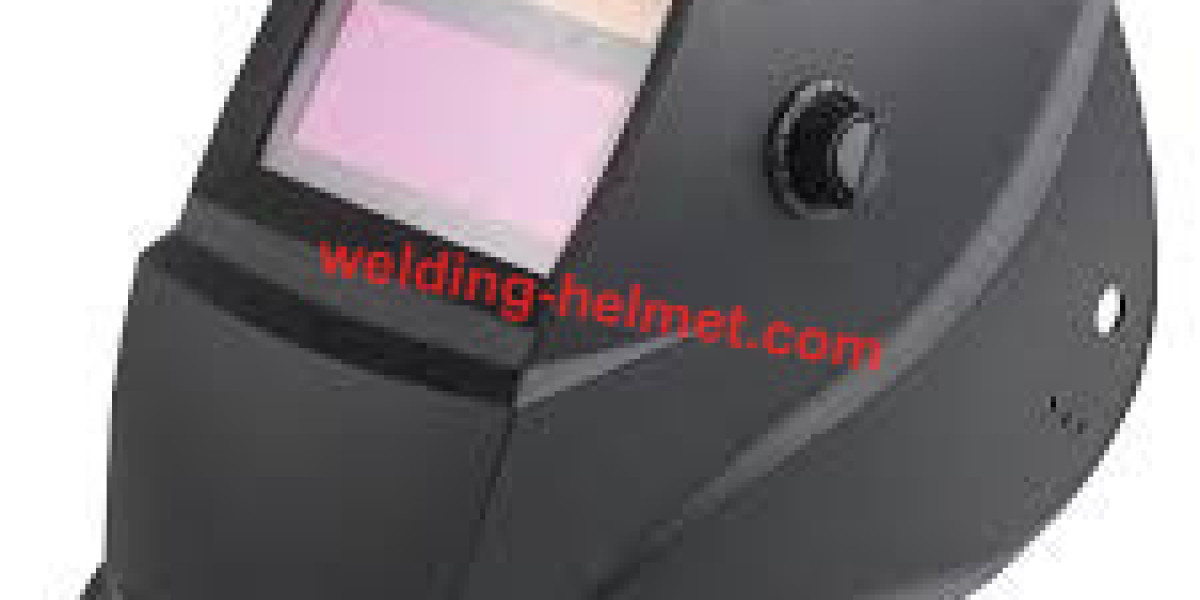

In a fabrication shop on a cold morning I watched a welder lift his helmet off a hook, flick a scatter of grit from the outside, and run a thumb across a pale scar left by spatter, a small ritual that told me more about the materials than any brochure. A full face auto darkening welding helmet is built from a molded plastic shell, a clear cover lens, a sealed filter window, a fabric and plastic headgear, and a few small knobs, and each of those parts ages in its own way.
The shell takes the most punishment. It is usually molded plastic that has to shrug off knocks, radiated warmth, and flying beads of molten metal, so it should feel firm without being brittle. Squeeze the sides gently and a sound shell flexes a little and returns, whereas one that creaks sharply or whitens at a bend is telling you it may crack. I have no specification sheet for any particular model in front of me, so I am describing the general picture and not quoting figures.
Surface finish tells you about the mold and the material. A smooth, evenly colored shell sheds sparks, while a rough or streaky one holds on to them and shows scorch marks sooner. Run a fingertip along the edge of the opening and the seam where two halves join, feeling for a sharp flash of plastic, since a rough lip scratches a neck and often hints at a hurried finish.
The cover lens is the sacrificial part. A thin sheet of clear plastic sits in front of the filter and takes pits from spatter and scratches from grinding grit, so it is made to be replaced and not preserved. Hold it against a window and tilt it, and look at how many tiny pits have gathered, because a hazy cover makes the view dim long before the filter itself is at fault. Ask whether replacements are easy to find and how simply they clip in.
On my bench that morning sat a sample from RLINGD, a brand of Taizhou Ruiling Optoelectronics Technology Co., Ltd., which describes itself as a high-tech enterprise working on research, development, production, and sales of welding products. The company says its automatic light welding masks can be adapted to different customers through OEM and ODM work and have entered Europe, South America, the Middle East, Southeast Asia, and other regions, though those are statements about reach and not measurements of this shell.
Headgear is the part that touches the wearer all day. A ratchet band should click through its steps with a crisp, even sound and hold firm under a tug, and the plastic around the knob should not feel gritty or loose. Sweat is hard on foam and fabric, so press the sweatband with a thumb and see whether it springs back, and check that stitching and rivets sit tight without a gap.
Pivots and knobs are small, yet they fail often. The hinges that let a helmet flip up or tilt need smooth, steady friction, since a loose one drops the shell unexpectedly while a stiff one makes you wrestle it. I once borrowed a helmet whose side knob had a hairline crack that nobody had noticed, and it snapped as I turned it, which taught me to look at every plastic fitting under a torch.
Heat and light slowly age plastic as well. A helmet left on a sunny windowsill or near a furnace can fade and grow brittle, and a lens window that has yellowed at the edge shows how much exposure it has had. Look at the sealed frame around the filter for gaps or lifting glue, because dust that gets behind the window cannot be wiped away, and a loose window rattles faintly when you shake the shell beside your ear.
Photographs at https://www.welding-helmet.com/product can show shell shapes and headgear styles, yet the flex of a shell and the click of a ratchet only appear in the hand. At the end of each shift I wipe the cover lens with a soft cloth and hang my full face auto darkening welding helmet by its band, and I run a thumb along the lower edge of the shell to feel for any new crack.