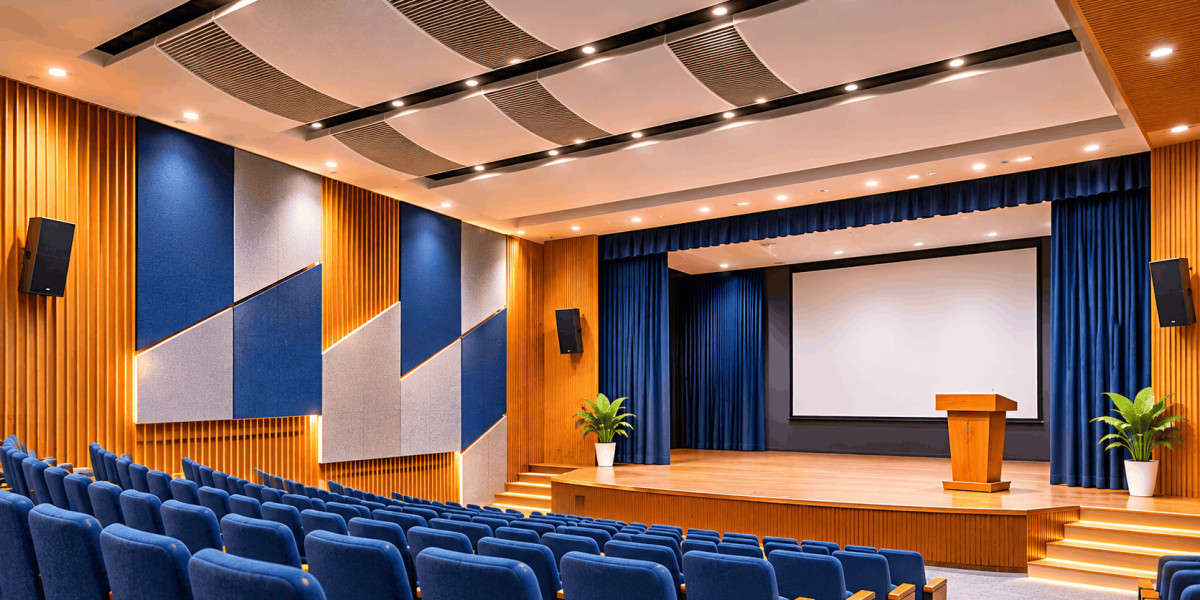

Large halls are among the hardest rooms to get right acoustically. Hard walls, tall ceilings, and bare floors let sound linger, so speakers become difficult to follow and music loses definition. Professional Acoustic Treatment for Auditorium from Ecotone Acoustic Limited solves this by planning how every surface absorbs, reflects, or scatters sound, so each seat hears clearly.
What Reverberation Time Tells You
The central measure is reverberation time, the length of time sound lingers after the source stops. Conferences and lectures need shorter reverberation for speech clarity, while music and performance spaces benefit from slightly longer, warmer decay. Even coverage matters too, so listeners at the back hear as well as those at the front.
Matching Treatments to Surfaces
Every surface has a job. Wall panels absorb mid and high frequencies and cut echo. Ceiling clouds or tiles control reflections from above. Diffusers scatter sound evenly and prevent dead spots. Upholstered seating and carpets add absorption and keep the room consistent whether it is empty or full. Bass traps manage low-frequency buildup in corners.
Commercial Venues That Benefit
- Corporate auditoriums and conference halls
- Theatres, cinemas, and performance venues
- Lecture halls and training centres
- Convention centres and banquet halls
- Auditoriums in schools, colleges, and institutes
- Worship spaces and community halls
Protecting Against Outside Noise
Treatment inside the hall is only part of the solution. Noise from corridors, air-conditioning, and adjoining rooms can spoil an event. Sound-rated doors, sealed walls, and quiet ventilation design keep background noise low. Acoustic doors at entrances and well-detailed partitions prevent disturbance in both directions.
Value for Venue Owners
Clear sound improves audience attention, reduces listening fatigue, and makes events feel professional. For venue owners, better acoustics support higher bookings, since organisers choose halls where speech and music sound right. Early planning also avoids costly retrofits after complaints begin.
Questions to Settle Before Starting
Request a site assessment that measures reverberation time and background noise. Compare Noise Reduction Coefficient (NRC) ratings, fire certification, and finish options, since commercial halls must meet safety rules. Make sure recommendations cover the whole room, including walls, ceiling, floor, seating, and doors, rather than one product. Confirm installation support and post-installation testing.
Errors That Cost Time and Money
Many projects over-treat with too much absorption, leaving the room dead and lifeless. Others ignore the ceiling, or add panels without checking where reflections actually occur. Planning from measurements prevents guesswork.
Final Thoughts
An auditorium succeeds when every listener hears clearly, and that depends on planned acoustics rather than afterthoughts. For commercial venues that want clear speech and balanced sound, investing in expert Acoustic Treatment for Auditorium is a practical decision that improves every event you host.





