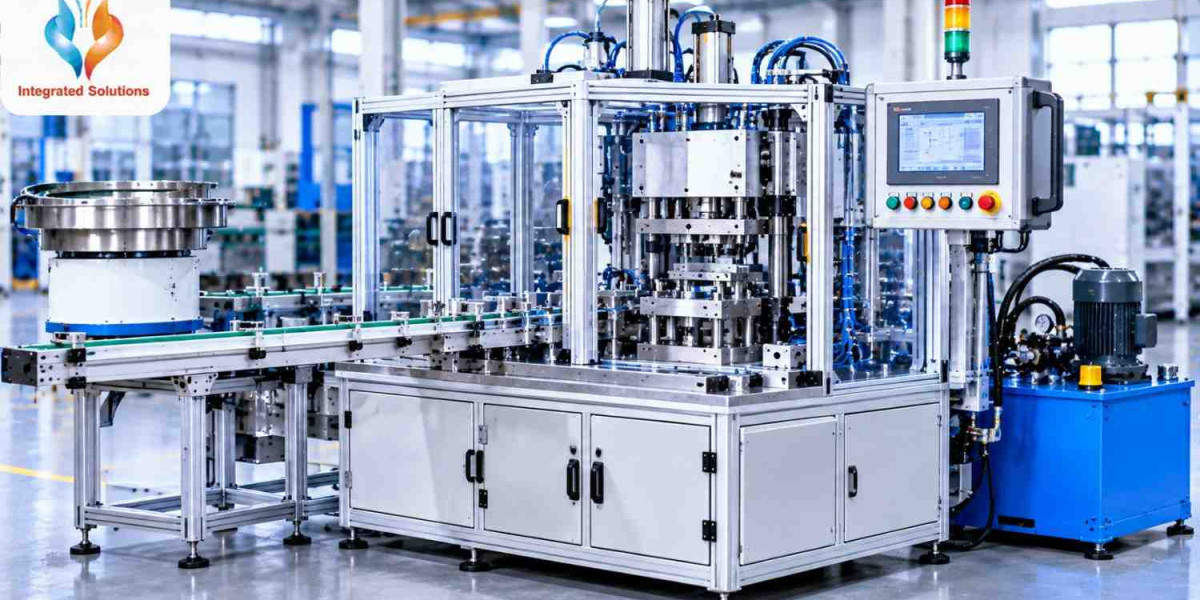

Modern manufacturing industries need faster production, consistent quality and better operational control. However, conventional machines may not always meet specific production requirements. This is particularly true when manufacturers perform repetitive operations or produce components with complex specifications.
Special Purpose Machines help manufacturers overcome these challenges. Engineers design these machines to perform specific industrial tasks based on production requirements. They help reduce manual intervention, improve operational accuracy and maintain consistency across production cycles. From automotive component manufacturing to electrical assembly, these machines support a wide range of industrial applications.
What Are Special Purpose Machines?
A special purpose machine (SPM) is customised industrial equipment designed to perform a specific manufacturing operation. Unlike general-purpose equipment, it focuses on predefined tasks based on component geometry, production volume and operational requirements.
Manufacturers can integrate mechanical, electrical, pneumatic and hydraulic systems into these machines to achieve the desired functionality.
An experienced Special Purpose Machines Manufacturer considers several factors during machine development, including component dimensions, cycle time, machining accuracy and workplace safety.
Common operations performed by SPMs include:
Component drilling and tapping
Industrial component assembly
Pressing and punching
Product inspection and testing
Component cutting and machining
Material handling
How Do Custom-Built Machines Improve Production Efficiency?
1. Reduce Production Cycle Time
Conventional manufacturing operations may require multiple setups and manual adjustments. Custom-built equipment can combine several operations into a single production cycle.
This reduces unnecessary material movement, setup time and delays between manufacturing stages. It also helps manufacturers achieve their production targets more efficiently.
2. Maintain Consistent Product Quality
Manual operations can introduce variations in component dimensions and assembly quality. Dedicated machinery helps maintain consistency through controlled operating parameters.
Engineers can also integrate sensors, fixtures and inspection mechanisms to monitor critical production conditions. These features help reduce dimensional errors and component rejection rates.
3. Reduce Manufacturing Costs
Although customised equipment requires an initial investment, it can help reduce long-term operational expenses.
Special Purpose Machines can minimise material wastage, repetitive labour requirements and unnecessary production steps. However, the actual cost savings depend on machine utilisation, production volume and maintenance requirements.
4. Improve Workplace Safety
Automated operations can reduce direct worker interaction with moving components, cutting tools and repetitive handling tasks.
Manufacturers can incorporate protective guards, emergency stop systems, safety interlocks and sensors into machine designs to support safer working conditions.
Industrial Applications of Special Purpose Machines
Different industries have different production challenges. Customised machinery allows manufacturers to address these challenges through application-specific engineering.
Industry | Common applications |
Automotive | Component drilling and assembly |
Electronics | Component testing and precision assembly |
Aerospace | Precision machining and inspection |
Packaging | Product handling, filling and sealing |
Heavy engineering | Metal cutting, pressing and drilling |
Electrical | Switchgear assembly and component testing |
These machines can also work alongside existing production equipment to support manufacturing operations without requiring a complete production line replacement.
What Should Manufacturers Consider Before Investing in an SPM?
Choosing the right equipment requires careful technical and financial evaluation. Manufacturers should understand their existing production challenges before investing in customised automation.
A reliable Special Purpose Machine Manufacturer in India should evaluate the following parameters before developing equipment:
Daily production volume and expected cycle time
Component dimensions and material properties
Required machining accuracy and tolerances
Installation space and power requirements
Level of automation required
Maintenance and operational costs
Compatibility with existing production equipment
Discussing these requirements during the initial design stage helps prevent unnecessary modifications later.
How Does Precision Engineering Influence Machine Performance?
The performance of customised industrial machinery largely depends on its engineering design and component quality. Even minor alignment errors can affect production accuracy.
Engineers must carefully evaluate fixture positioning, structural stability, material strength and tool movement during machine development.
Precision-machined components, programmable controllers and suitable inspection mechanisms can further improve operational consistency. Proper assembly and performance testing also help identify potential issues before installation.
Why Is Regular Machine Maintenance Important?
Regular maintenance helps manufacturers maintain equipment performance and avoid unexpected production interruptions.
Maintenance teams should inspect moving components, lubricate mechanical parts and monitor electrical connections. They should also check pneumatic pressure, hydraulic systems and sensor functionality wherever applicable.
Keeping detailed maintenance records helps identify recurring equipment problems and plan preventive maintenance activities. This approach can extend machine service life and support stable manufacturing operations.
Why Choose Integrated Solutions for Customised Industrial Machinery?
Integrated Solutions has been providing engineering and manufacturing solutions since 2004. The company develops customised equipment based on customer specifications, production challenges and automation requirements.
As a Special Purpose Machines Manufacturer, Integrated Solutions focuses on application-specific machine design, precision engineering, performance testing and installation support. The company also provides operator training and technical assistance to support industrial manufacturing requirements.
Conclusion
Customised industrial machinery plays an important role in modern manufacturing. It helps businesses improve production efficiency, maintain component quality and reduce unnecessary manual operations.
However, successful implementation depends on proper engineering, accurate requirement analysis and regular equipment maintenance. Manufacturers should prioritise long-term operational performance rather than initial investment costs alone.
Looking for customised machinery to improve your industrial production? Contact Us Now at Integrated Solutions to discuss your manufacturing and automation requirements.
Frequently Asked Questions (FAQs)
1. What is the primary purpose of an SPM?
An SPM performs specific manufacturing operations with improved accuracy, speed and operational consistency.
2. Can an SPM be customised for different industrial applications?
Yes. Engineers can customise these machines according to component specifications, production volume and operational requirements.
3. Are SPMs suitable for mass production?
Yes. They are particularly useful for high-volume manufacturing involving repetitive and predefined operations.
4. What factors determine the cost of an SPM?
Machine complexity, component quality, automation level, production capacity and technical specifications influence the overall cost.
5. Can customised machinery reduce production waste?
Yes. Controlled operations and accurate component positioning can reduce manufacturing errors, material waste and product rejection.






