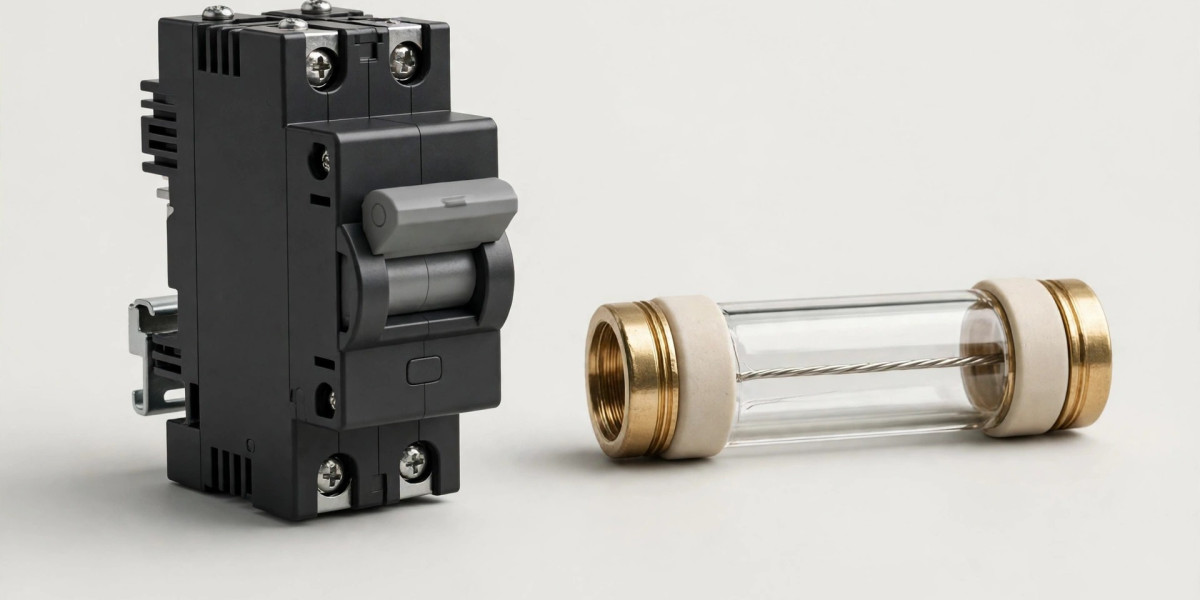

Every home circuit needs protection. Two devices do this job: an MCB and a fuse. Both stop too much current from damaging your wires and appliances. But they work in very different ways. This guide explains the difference in simple words, so you can decide which one is better for your home. It is written for homeowners, electricians and panel builders in Pakistan. Shenzhen Nata supplies circuit protection for homes, factories and solar systems across the country.
MCB resets - after a trip, switch it back on, no replacement needed.
Fuse melts once - when it blows, you must fit a new one.
MCB shows the trip - you can see which circuit tripped, so the fault is easy to find.
What Is an MCB?
An MCB is a small switch in your distribution board. It watches the current in one circuit. When the current goes too high, or a short circuit happens, it trips and switches the circuit off.
After you fix the fault, you switch it back on. It works again and again. It protects against overload and short circuit. You do not need a spare, and you do not need any tools to reset it.
What Is a Fuse?
A fuse is a simple device with a thin metal wire inside. When too much current flows, the wire melts and breaks the circuit. The power stops.
But the fuse is finished. You must replace it with a new fuse of the same rating. Fuses are old technology. You still find them in old boards and in some appliances, where they were fitted by design.
MCB vs Fuse: The Main Differences
How they work - an MCB trips with a switch. A fuse melts its wire to break the circuit.
After a fault - you reset an MCB in seconds. You must replace a blown fuse, and you must have the right spare at home.
Finding the fault - an MCB shows which circuit tripped. A blown fuse gives no clear sign, so you must check each fuse to find the faulty one.
Wrong replacement risk - a fuse fitted with a higher rating than the circuit needs can leave the wires unprotected. An MCB has a fixed rating, so this mistake cannot happen.
Speed and precision - a fuse can be very fast on a heavy short circuit. An MCB is consistent and precise on both overload and short circuit.
Cost over time - a fuse costs less at first. But every blown fuse must be replaced, and that cost adds up over the years. An MCB costs more at first and lasts for years without replacement.
This MCB vs fuse for home circuits comparison shows why most modern homes now use MCBs instead of fuses.
Which One Is Better for a Home Circuit?
For a modern home, the MCB is the better choice. You reset it in seconds. You can see which circuit tripped. There is no spare to buy and no wrong rating to fit by mistake.
Fuses still have a place in old boards and in some appliances. But for a new home board, or when you upgrade an old fuse board, an MCB board is safer and simpler to live with. If your home still runs on fuses, ask an electrician about changing the board to MCBs.
Shenzhen Nata offers MCBs, MCCBs, RCCBs, RCBOs, magnetic contactors, changeover switches, SPDs and DC solar protection for homes, factories and solar systems in Pakistan and worldwide. Bulk orders, distributors and OEM enquiries are welcome.
Conclusion
A fuse melts once and must be replaced. An MCB trips, resets and works again. For a home circuit, that simple difference makes the MCB the better choice.