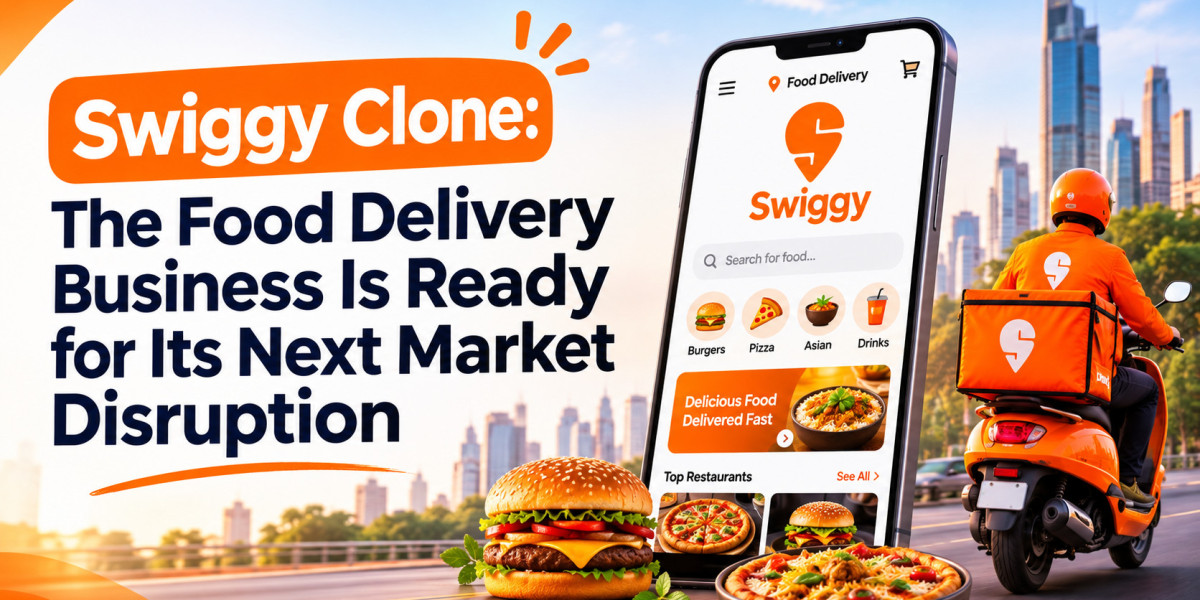

A restaurant can have excellent food, competitive pricing, and loyal customers, yet struggle to reach new audiences. Meanwhile, customers may be searching for specific cuisines, affordable meals, or restaurants that are not available in their immediate neighbourhood. Connecting these two sides of the market is where digital food delivery platforms create commercial value.
The Swiggy clone business model offers an interesting reference for entrepreneurs because it demonstrates how restaurant aggregation, delivery infrastructure, customer engagement, and adjacent services can work together. However, replicating an existing platform's interface is not enough to establish a competitive business.
The bigger question is: Where can a new food delivery marketplace create value that established platforms have not fully captured?
The Untapped Value Is Not Always in Mainstream Restaurants
Major restaurant chains already attract significant online attention. But smaller food businesses, regional specialists, independent cafes, and emerging cloud kitchens often need better digital visibility.
This creates an interesting marketplace strategy: focus on merchant categories that have strong local demand but limited digital reach.
Swiggy and Kearney's How India Eats 2025 report highlights growing interest in regional cuisines and changing restaurant discovery behaviour. Customers are increasingly exploring different food categories rather than restricting their choices to familiar options.
A new platform can respond by building dedicated marketplace segments around:
Regional and traditional food specialists.
Independent restaurants and neighbourhood kitchens.
Healthy meals and specialised dietary menus.
Bakery, dessert, and beverage businesses.
Affordable everyday meal providers.
The commercial advantage comes from building a merchant network that gives customers a reason to explore the platform repeatedly.
The Delivery Network Is Becoming a Competitive Asset
Food delivery is often discussed from the customer's perspective, but the underlying delivery infrastructure has a direct impact on business profitability.
Consider two platforms operating in the same neighbourhood. One has many restaurant listings but inconsistent delivery availability. The other has fewer merchants but stronger preparation coordination, rider allocation, and delivery coverage.
The second platform may create a more dependable experience.
This is why new entrepreneurs should consider delivery network design before expanding their restaurant partnerships.
Location-based order allocation, delivery batching where appropriate, real-time rider availability, and route optimization can help improve operational efficiency.
The growing use of AI in logistics also introduces opportunities for predictive demand planning and more intelligent delivery coordination.
From Food Ordering to Multiple Consumption Occasions
Customers do not follow the same purchasing pattern throughout the day.
Breakfast orders, workplace lunches, evening snacks, family dinners, and late-night meals represent different consumption occasions. A food delivery business can use these patterns to create targeted merchant categories and promotional strategies.
This is where marketplace expansion becomes commercially interesting.
Rather than adding unrelated services immediately, entrepreneurs can introduce complementary categories such as bakery products, beverages, groceries, and convenience essentials.
Swiggy's broader ecosystem, which includes food delivery and Instamart, demonstrates how adjacent categories can extend customer engagement beyond restaurant ordering.
For a new business, category expansion should follow customer demand, merchant availability, and fulfilment capacity.
What Happens When Food Delivery Becomes Data-Driven?
Every customer search, restaurant visit, abandoned cart, and completed order provides useful information.
When analysed effectively, these interactions can help a platform understand:
Customer preferences: Which cuisines, price ranges, and meal categories attract different audiences?
Merchant performance: Which restaurants generate repeat orders and maintain reliable preparation times?
Demand patterns: Which neighbourhoods experience higher demand during specific periods?
Promotion effectiveness: Which campaigns encourage additional orders rather than simply reducing margins?
AI can strengthen this process through personalized recommendations, demand forecasting, automated customer support, and intelligent merchant insights.
The opportunity is to turn platform activity into practical business intelligence rather than collecting data without using it.
Building the Technology Behind This Business Model
The technology infrastructure should connect all marketplace participants without creating unnecessary operational complexity.
With spotneats, entrepreneurs can explore a Swiggy Clone App that brings together customer applications, restaurant management panels, delivery partner applications, and an administrative dashboard.
The platform provides a starting point for businesses looking to establish restaurant partnerships