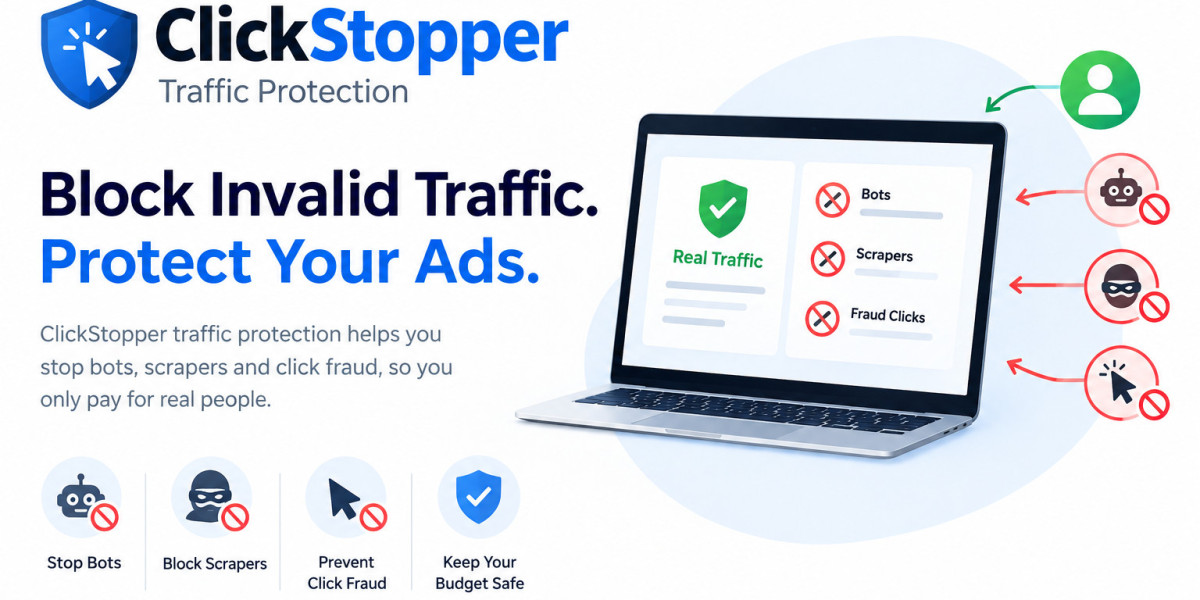

ClickStopper Ad Traffic Protection focuses on identifying suspicious visitor behaviour to help advertisers better understand the quality of their traffic and how visitors interact with their advertising. With ClickStopper Ad Traffic Protection, advertisers can examine unusual visitor activity, identify potential traffic issues, and reduce the risk of wasting advertising budgets on visitors who do not contribute to business goals.
It is important that advertisers look beyond clicks to better identify invalid traffic. Clicks may not always lead to a conversion, but making an ad more interactive or engaging may prompt a visitor to take other actions and ultimately convert. These interactions may also provide insights that positively impact future advertising campaign modifications.
Understanding Invalid Traffic and Its Common Sources
Invalid traffic (IVT) refers to visits and clicks that are generated through means other than genuine user interest in an advertisement or website. Automation is one common technique used to generate IVT. There are several automated methods, including:
Click Scripts: Automated programs designed to click on advertisements.
Proxy-Based Traffic: Traffic generated through visitors coming from proxy networks that disguise their original locations.
Repeated Interactions: Visitors engaging in repeated clicks on an advertisement or visiting a webpage multiple times.
Suspicious Referrers: Traffic directed from sources that display unusual behaviour toward a webpage or advertisement.
Not all unusual behaviour is fraudulent. Real people may take actions that seem suspicious, such as refreshing a page, using a VPN, or making several visits before purchasing. Because of this, advertisers should consider multiple signals when evaluating visitor behaviour and making blocking decisions rather than relying on a single signal.
How ClickStopper Helps Investigate Suspicious Traffic Sources
ClickStopper Ad Traffic Protection helps advertisers examine visitor behaviour to identify suspicious activities and interactions that warrant further investigation. When evaluating potential invalid traffic, repeated actions, visitor interactions, and connection information can provide additional context.
How Invalid Clicks Affect Advertising Campaign Performance
Invalid traffic wastes advertising budgets and makes campaigns less efficient. Below are some common effects of unwanted traffic.
Wasted Advertising Budget
In a pay-per-click campaign, invalid traffic can be generated through fraudulent activity, resulting in clicks that do not represent genuine consumer interest and waste part of the campaign budget.
Poor Conversion Rates
A campaign can receive many clicks but have a poor conversion rate because of a large volume of low-quality visits from consumers who show little interest in the product or service.
Inconclusive Campaign Results
Invalid traffic can make it difficult for advertisers to evaluate campaign results and understand which advertising sources are actually performing well.
Poor Lead Quality
While visits can generate form submissions, the resulting leads may not be qualified or may not represent genuine business opportunities.
Inefficient Campaign Optimisation
Campaign modifications may be based on click data that does not accurately represent actual customer behaviour.
Some advertisers increase bids based on click volume. One campaign may receive thousands of clicks while another receives hundreds. However, just because a campaign receives hundreds of clicks and generates very few enquiries or sales does not mean another campaign with fewer clicks has performed worse. Instead of focusing on the campaign with the highest click volume and increasing its bid, advertisers should investigate the reason behind the performance gap.
How ClickStopper Helps Advertisers Evaluate Campaign Performance
Advertisers can use ClickStopper to evaluate suspicious visits and gain a better understanding of traffic patterns that may affect campaign performance. By analysing traffic across different campaigns, advertisers can look for inconsistencies involving device types, visitor locations, and activity over time.
Identifying Suspicious Visitor Behaviour With ClickStopper
Inconsistent Traffic Patterns Worth Investigating
Some traffic patterns that may require further investigation include:
Sudden, large spikes in clicks or impressions with little to no increase in conversions.
Multiple visitors coming from the same IP address or network.
Geographic traffic that does not align with the intended audience.
Identical visitor sessions across multiple visitors.
Visitors spending very little time on a website or interacting with advertisements numerous times.
There can be several reasons for unusual traffic behaviour. It may be attributed to changes in an advertiser's promotional activity, audience targeting, or the product or service being advertised.
Using ClickStopper to Analyse Unusual Traffic Patterns
ClickStopper Ad Traffic Protection allows advertisers to analyse clicks using visitor behaviour and available traffic information. Advertisers can investigate whether suspicious activity may be affecting their advertisements by reviewing visitor interactions and other available traffic signals.
How Ad Fraud Protection Helps Investigate Suspicious Traffic
With Ad Fraud Protection, advertisers can investigate traffic sources and reduce the impact of unengaged visitors. This helps them understand whether their campaigns are reaching their intended audiences.
For example, consider an advertiser who has a landing page receiving visits from numerous IP addresses that appear to be located in the same area. This can be concerning, especially if many visits display similar behaviour and generate very few meaningful actions.
Important Signals for Identifying Suspicious Activity
Some signals that are useful for analysing visitor behaviour include:
Click Frequency: A rapid increase in the number of clicks can be concerning and may require further investigation.
IP Reputation: Connections associated with proxy services or suspicious activity can provide additional context.
Device Information: Similar device attributes across numerous visits may indicate unusual behaviour.
Session Behaviour: A large number of visits within a short timeframe displaying similar patterns may indicate automated activity.
Conversion Data: Gaps between clicks and meaningful actions can provide additional information about campaign traffic quality.
Combining these signals can improve the accuracy of traffic analysis. Individual signals are rarely sufficient to classify visitors correctly.
How ClickStopper Uses Traffic Insights for Investigation
ClickStopper provides advertisers with the ability to investigate questionable visits using available traffic data. This helps them analyse patterns that may negatively affect their advertising efforts and better understand IP-related activity, devices, and visitor interactions.
Distinguishing Automated Traffic From Genuine Visitors
Automated visits may seem suspicious, but not all automated activity is harmful. Some automated systems legitimately access websites for purposes such as search engine crawling and website monitoring. Other automated visits are designed to imitate normal visitor behavior.
Real visitors may also exhibit behaviour that seems suspicious. For example, a visitor may access a website using a VPN from a distant location. Genuine visitors can display unusual browsing patterns for several reasons.
What Advertisers Should Evaluate When Analysing Bot Activity
Does the visitor behave as expected on the website?
Do multiple sessions follow the same pattern?
Are there similarities in devices, browsers, and operating systems?
Is the activity coming from the expected audience?
Does the visit lead to meaningful user interaction?
The reason for making this distinction is that blocking the wrong visitors can lead to lost potential customers. Effective Invalid Traffic Detection should identify questionable activity without blocking traffic simply because visitors use proxies or VPNs.
How ClickStopper Helps Avoid Unnecessary Traffic Blocks
ClickStopper Ad Traffic Protection gives advertisers a more informed way to handle questionable visits. Advertisers should take a broader view of behavioural signals to understand visitor activity rather than automatically classifying proxy or VPN visitors and unusual sessions as fraudulent.
This approach focuses on investigating suspicious activity while helping advertisers avoid unnecessary restrictions on genuine customers.
Choosing a Traffic Protection Tool for Advertising Campaigns
A Traffic Protection Tool helps address advertisers' concerns about declining traffic quality. It assists in analyzing visitor traffic to understand where visitors come from and how they behave on a website.
Features to Consider When Choosing a Traffic Protection Solution
Capability | Why It Matters |
Incoming Connection Analysis | Helps identify abnormal connection patterns. |
Device Fingerprinting | Provides additional information about visitor devices. |
Behaviour Analysis | Helps identify automated and repetitive visits. |
Traffic Reporting | Provides visibility into suspicious and inconsistent activities. |
Traffic Filtering | Allows advertisers to manage advertising traffic based on defined rules. |
Establishing Normal Traffic Patterns Before Filtering
Advertisers should first understand the devices, locations, and other attributes that make up their regular visitor traffic. This provides a baseline for identifying unusual behaviour and making more informed filtering decisions.
How ClickStopper Supports Advertising Traffic Protection
ClickStopper Ad Traffic Protection helps identify suspicious visits and provides insights that assist in analysing activities affecting advertising campaign traffic quality and quantity. The focus is on recognising normal patterns and deciding on appropriate actions using available information rather than assuming every unusual behaviour is malicious.
Monitoring Advertising Traffic Before Problems Grow
Advertising campaigns can span multiple platforms, and new traffic patterns can develop quickly. Continuous monitoring helps advertisers identify and analyse unusual behaviour. Before modifying campaign settings, advertisers should understand whether these behaviours are negatively affecting campaign performance.
Common Traffic Monitoring Practices
Investigating sudden increases in clicks across advertisements.
Evaluating whether traffic is evenly distributed across different advertising platforms.
Investigating whether unusual activity is occurring on specific devices or in particular locations.
Checking whether suspicious activity is resulting in conversions.
Documenting traffic changes and recording which settings were modified.
Real-time traffic monitoring gives advertisers additional information, but it should not completely replace historical data analysis. For example, an unexpected spike in clicks could be related to an event in a current campaign and should be considered before making optimisation changes.
Using ClickStopper for Ongoing Traffic Monitoring
ClickStopper can assist advertisers in analyzing suspicious traffic activity and understanding changes in visitor behaviour. Reviewing traffic activity and filtering decisions can help determine the possible cause of a problem and identify adjustments that may improve campaign performance.
Measuring Advertising Traffic Quality and Value
There is a difference in the level of value and quality delivered to a website by visitors generated through different advertisements. Traffic quality refers to how visitors interact with a website after arriving through an advertising source.
Which Metrics Matter When Analysing Traffic Quality?
Metric | What Advertisers Can Understand |
Click-to-Conversion Rate | Whether clicks result in conversions. |
Engagement Rate | Whether visitors interact with the content. |
Cost Per Qualified Lead | How much it costs to acquire a qualified lead. |
Session Duration | How long visitors stay on a page. |
Traffic Source Performance | Whether a traffic source generates valuable visitors. |
Repeat Visits | Whether visitor behaviour remains consistent across multiple visits. |
The business and the objective of the campaign help determine the importance of each metric. For example, a visitor may visit a landing page for a second and then call the business. Does that visitor have no value simply because the session was short?
There are also many factors outside an advertiser's control. Understanding these factors may help explain visitor behaviour and how it affects business results. A high bounce rate may not indicate poor-quality traffic if the goal of the website is to provide contact details.
Practical Ways to Improve Advertising Traffic Quality
1. Assess Landing Page Quality
Review engagement beyond clicks. Look at session duration, page interactions, and conversions to understand how visitors respond to landing page content.
2. Identify Traffic Sources
Analyse the locations, devices, networks, and referrers bringing visitors to your campaigns. Look for irregular patterns and sudden changes.
3. Analyse Multiple Detection Signals
Consider multiple signals, including device data, IP reputation, visitor behavior, and conversions. Making decisions based on a single data point increases the likelihood of incorrect filtering decisions.
4. Reevaluate Traffic Filtering Rules
Review filtering rules to see whether they are affecting legitimate users. Adjust rules when campaign conditions or traffic types and volumes change.
5. Maintain a Campaign Journal
Keep a record of filtering changes and unusual campaign performance. Also, document visitor interactions and campaign results. This helps advertisers understand the impact of changes and compare performance over time.
How ClickStopper Works Alongside Traffic Quality Analysis
ClickStopper helps advertisers identify questionable visits and investigate differences in traffic patterns. Traffic information and landing page conversion reports provide additional insight into advertising campaign performance. Reviewing these reports helps businesses better understand how their advertising budgets are being used.
Traffic Protection for Affiliate Marketers
Many challenges faced by affiliate marketers stem from differences in the quality of traffic directed to the offers they promote. This makes it important for affiliate marketers to understand the quality of traffic reaching their campaigns. In some cases, campaigns may appear successful based on the number of clicks they generate while failing to achieve the desired results.
Evaluating Traffic Quality at the Source Level
Understanding the quality of traffic directed to a campaign helps affiliate marketers identify placements and sources that require further investigation.
Key Areas Affiliate Marketers Should Review
Landing Page Engagement: Check how traffic interacts with the landing page.
Conversion Differences: Watch for unusual differences between clicks and conversions.
Visitor Behavior: Observe changes in visitor behaviour across different sources.
Campaign Costs: Study campaign spending against meaningful results.
High volumes of clicks but low conversions may indicate a problem specific to one placement. The affiliate marketer should not assume the entire campaign is failing. Instead, the specific placement should be investigated more closely.
This approach supports more focused campaign optimisation and helps identify traffic quality issues at the source level.
Using ClickStopper to Analyse Affiliate Traffic
ClickStopper Ad Traffic Protection provides advertisers with a way to examine different aspects of campaign traffic. When combined with placement-level reporting, SubID tracking, and conversion tracking, these insights can help affiliate marketers develop a broader understanding of traffic quality.
Building a Long-Term Ad Fraud Prevention Strategy
Ad Fraud Protection should not be treated as a one-time activity. Traffic automation methods and visitor behaviour continue to evolve, making ongoing traffic monitoring necessary. Filtering rules should be reviewed and adjusted based on the results of previous campaign optimization.
Long-Term Practices for Maintaining Traffic Quality
Set Traffic Benchmarks: Establish normal campaign and traffic performance levels.
Review Historical Performance: Regularly compare current results against previous performance to gain more context.
Evaluate Multiple Signals: Consider several indicators when making decisions about traffic quality.
Update Filtering Rules: Adjust filtering rules based on campaign and traffic performance.
Measure Results: Evaluate the impact of filtering changes on conversions and advertising costs.
Protect Genuine Visitors: Review filtering decisions to avoid blocking legitimate customers.
Automated monitoring can be combined with human review. While ClickStopper can help advertisers investigate questionable traffic and review visitor activity, these practices allow businesses to respond to potentially suspicious activity while maintaining their focus on legitimate users and business goals.
Increasing the Value of Advertising Traffic With ClickStopper
Analysis of visitor behaviour, device information, conversion data, and advertising traffic can help advertisers identify potentially legitimate visits and determine whether ad clicks may be invalid.
As part of an Invalid Traffic Detection strategy, combined with appropriate Ad Fraud Protection and a suitable Traffic Protection Tool, ClickStopper Ad Traffic Protection helps advertisers evaluate potentially suspicious activity. Continuous monitoring and appropriate filtering allow advertisers to better understand their traffic and focus on achieving meaningful results from their marketing campaigns.
Frequently Asked Questions About Invalid Traffic and Click Fraud
1. What Are the Most Common Sources of Invalid Advertising Traffic?
Automated bots and click scripts are common sources of invalid traffic. Suspicious referrers and repeated interactions can also indicate invalid activity. Fraudulent activity may also be disguised through proxy networks.
2. How Can Advertisers Identify Suspicious Click Activity?
Advertisers should investigate unusual click frequencies, geographic patterns, device types, visitor behavior during sessions, and conversion data. ClickStopper can provide insights into suspicious click activity and assist advertisers with their investigations.
3. Are Proxy and VPN Visitors Considered Invalid Traffic?
Generally, no. Proxy and VPN services are also used by legitimate visitors to protect their privacy or conceal their actual locations. Advertisers should consider additional behavioral and technical signals alongside proxy and VPN connections before implementing invalid traffic filtering