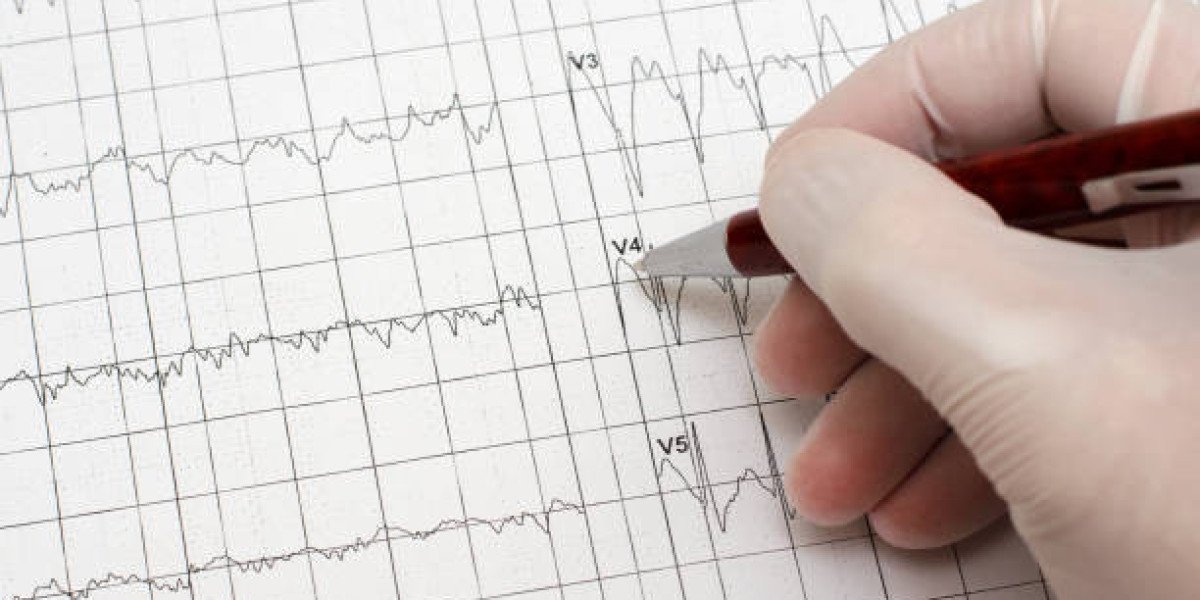

The Role of MATLAB in Biomedical Signal Analysis
MATLAB has become one of the most widely used platforms for interpreting biomedical signals because it combines mathematical computing, visualization, and advanced signal processing capabilities in a single environment. Researchers, engineers, and healthcare professionals use MATLAB to study electrical activity from the brain and heart through electroencephalogram (EEG) and electrocardiogram (ECG) data. These signals provide valuable information about neurological conditions, heart function, and human physiology.
EEG records electrical patterns generated by brain activity, while ECG captures the electrical changes associated with heartbeats. Although these signals are different in origin, both contain important patterns that require careful processing before meaningful conclusions can be drawn. Raw recordings often include unwanted noise from movement, electrical interference, or equipment limitations. MATLAB writing allows users to create structured programs that clean, analyze, and visualize these complex datasets efficiently.
According to MathWorks, biomedical signal processing workflows commonly involve signal acquisition, visualization, preprocessing, artifact removal, and feature extraction. MATLAB provides dedicated tools that support each stage of this process, helping users transform raw physiological recordings into understandable results.
Why MATLAB Is Valuable for EEG and ECG Research
A major advantage of MATLAB is its ability to handle large amounts of numerical data while offering specialized functions for signal analysis. Researchers can import EEG and ECG recordings from different file formats, apply filters, identify patterns, and generate graphs that make biological signals easier to interpret.
For EEG analysis, MATLAB can assist with studying brain rhythms such as alpha, beta, delta, and theta waves. Researchers may examine frequency changes linked to attention, sleep, cognitive tasks, or neurological disorders. For ECG interpretation, MATLAB can help detect heart rate patterns, identify waveform characteristics, and calculate measurements related to cardiac performance.
MATLAB also supports widely used biomedical toolboxes and research environments. For example, EEGLAB provides MATLAB based tools for EEG data management, preprocessing, and analysis, while other MATLAB resources support ECG classification and feature extraction.
For readers seeking additional guidance on MATLAB programming tasks and technical applications, the resource available through our website on matlab coder assignment help uk offers further support.
The Process of Writing MATLAB Code for EEG and ECG Interpretation
Importing and Preparing Biomedical Data
The first step in MATLAB based EEG and ECG interpretation is importing recorded data into the working environment. Data may come from medical devices, research databases, or laboratory experiments. MATLAB allows users to load common formats and organize measurements into arrays or structured data forms.
After importing, researchers usually inspect the signal visually. Plotting the raw waveform helps identify unusual patterns, missing information, or visible disturbances. A clear understanding of the original signal is essential before applying any processing methods because unnecessary modifications can affect the accuracy of later results.
For EEG recordings, researchers often manage multiple channels because brain activity is measured through several electrodes placed across the scalp. ECG recordings are usually simpler in structure but still require careful examination because small waveform changes may represent meaningful physiological information.
Filtering and Removing Signal Noise
Signal quality is one of the most important factors in EEG and ECG interpretation. Real world recordings frequently contain artifacts caused by muscle movement, electrode changes, breathing, or environmental electrical signals. MATLAB enables researchers to design and apply filters that reduce these unwanted effects while preserving important biological information.
Common filtering approaches include removing very low frequency changes, reducing high frequency noise, and eliminating interference from electrical equipment. In EEG research, additional methods such as independent component analysis may be used to separate brain signals from eye movements or muscle activity.
Effective preprocessing improves the reliability of later analysis. If noise is not handled properly, algorithms may identify false patterns and produce inaccurate findings. MATLAB’s signal processing features support these preprocessing steps through built in functions and specialized applications.
Extracting Features from EEG and ECG Signals
Feature extraction is a key stage in interpreting physiological data. Instead of examining every data point individually, researchers identify important characteristics that describe the signal.
In ECG analysis, useful features may include heartbeat intervals, waveform peaks, and changes in rhythm. These measurements help researchers study normal cardiac activity and detect unusual patterns. MATLAB can automatically identify important waveform points and calculate statistical measurements from ECG recordings.
In EEG analysis, researchers often examine frequency patterns and changes in brain activity. Techniques such as spectral analysis allow users to understand how signal energy is distributed across different frequency ranges. These features can later be used in machine learning models for applications such as cognitive state recognition or medical research.
Feature extraction methods supported by MATLAB include statistical analysis, spectral measurements, and classification focused approaches. These methods are widely used in biomedical engineering studies because they convert complex signals into measurable information.
Visualizing and Interpreting Results Using MATLAB
Creating Meaningful Graphs and Signal Displays
Data visualization is one of MATLAB’s strongest features for EEG and ECG interpretation. Clear graphs allow researchers to identify trends, compare conditions, and communicate findings effectively.
For ECG signals, waveform plots can show individual heartbeats and highlight important points such as the peaks associated with electrical activity. Researchers may also create frequency based graphs to examine hidden patterns within the signal.
For EEG data, visualization can involve multiple channels, brain activity maps, or frequency based representations. These displays help researchers understand relationships between different areas of the brain and changes over time.
High quality images and graphs should always include descriptive labels and accessible formatting. For example, an EEG waveform image should use alt text such as “MATLAB visualization of multi channel EEG brain activity signals over time.” This improves accessibility and supports better user experience.
Supporting Research and Clinical Applications
MATLAB writing for EEG and ECG data interpretation has applications across academic research, healthcare technology, and biomedical engineering. Scientists use these methods to explore neurological activity, develop monitoring systems, and improve diagnostic approaches.
Machine learning has further expanded MATLAB’s role in biomedical analysis. Processed EEG and ECG features can be used to train models that recognize patterns associated with specific conditions. However, automated analysis should support expert interpretation rather than replace medical judgment.
Reliable research requires careful validation, appropriate datasets, and transparent methods. Researchers often compare MATLAB results with established scientific approaches and follow standards for biomedical data analysis.
Best Practices for Effective MATLAB Based Signal Interpretation
Writing Clear and Reliable MATLAB Programs
Good MATLAB writing involves more than creating code that produces results. Well structured programs are easier to test, improve, and share with other researchers. Clear variable names, organized functions, and detailed documentation help maintain accuracy throughout the research process.
Researchers should also consider data quality, sampling rates, and analysis methods before drawing conclusions. A powerful software environment cannot compensate for poor quality data or unsuitable processing choices.
Future Developments in Biomedical Signal Processing
The future of EEG and ECG interpretation is closely connected with artificial intelligence, wearable technology, and advanced data analysis. MATLAB continues to support these developments by providing tools for signal processing, deep learning, and automated pattern recognition.
As healthcare moves toward personalized monitoring and remote diagnostics, the ability to interpret physiological signals accurately will become increasingly important. MATLAB writing provides researchers with a flexible foundation for exploring these possibilities while maintaining scientific accuracy.
Conclusion
MATLAB writing for EEG and ECG data interpretation provides a practical approach for transforming complex biological recordings into meaningful information. Through data preparation, filtering, feature extraction, and visualization, MATLAB supports researchers in understanding brain and heart activity more effectively.
Whether used in academic studies, biomedical engineering projects, or healthcare research, MATLAB remains a valuable tool for analyzing physiological signals. With careful programming practices and reliable scientific methods, it enables deeper insights into human health and advances the development of modern diagnostic technologies.