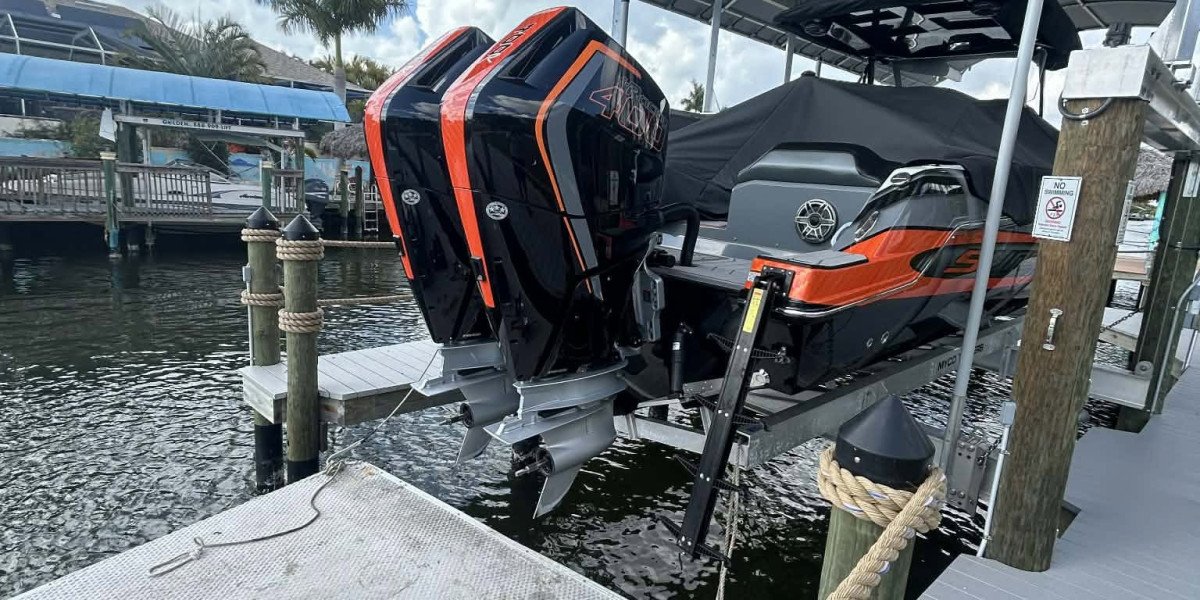

The propeller is the only outboard engine component that directly converts the engine's mechanical energy into the thrust that moves the boat. Every other system — fuel delivery, ignition, cooling, lubrication — exists in service of delivering rotational energy to the propeller shaft in a form that the propeller can convert to forward or reverse motion. The propeller's geometry, its condition, its material, and its match to the specific combination of engine and hull determine whether the engine operates in its designed power range, whether the boat achieves its designed performance, and whether the mechanical energy that the fuel system and ignition system worked to produce is efficiently transferred to the water or wasted in cavitation, ventilation, and vibration.
Despite this central role, the propeller is one of the most consistently underserviced components on recreational outboard boats. Many boat owners operate with factory-installed propellers that are not optimally matched to their boat's actual use, accept performance that has degraded from blade damage without recognizing the degradation as significant, and miss the early warning signs of propeller damage that indicate impacts and misalignment more serious than the visible surface damage suggests.
This guide covers propeller selection, the physics of propeller performance, common damage patterns and their causes, field assessment of propeller condition, repair standards and when replacement is more appropriate than repair, and the specific performance considerations for Southwest Florida's diverse boating environments.
Propeller Physics: What Determines How a Propeller Works
Pitch: The Fundamental Performance Variable
Pitch is the most important single characteristic of a propeller. It is defined as the theoretical distance the propeller would advance in one complete revolution if it were moving through a solid medium with no slippage — analogous to a screw advancing through wood.
A 21-inch pitch propeller would theoretically advance 21 inches per revolution. At 5,000 RPM, a 21-inch pitch propeller turning in a solid medium would advance 5,000 × 21 inches = 105,000 inches = 8,750 feet per minute = approximately 87 mph. Real propellers operating in water do not achieve this theoretical advance — the difference between theoretical advance and actual advance is slip, which for well-designed propellers in normal conditions ranges from 10 to 20 percent.
Higher pitch → higher theoretical speed at any RPM, but higher load on the engine
Lower pitch → lower theoretical speed at any RPM, but lower load on the engine
The correct pitch for any boat-engine combination is the pitch that allows the engine to reach its manufacturer-specified wide-open-throttle (WOT) RPM range when the boat is under normal load conditions. An engine that cannot reach WOT RPM is over-pitched — the propeller is loading the engine beyond its design output at WOT. An engine that exceeds WOT RPM is under-pitched — the propeller is not loading the engine adequately at WOT.
Why WOT RPM matters: The manufacturer's WOT RPM range (typically 5,000 to 6,000 RPM for most modern four-stroke outboards) defines the engine's operating range where maximum power is developed safely. An engine that runs below the WOT RPM range at full throttle is laboring under excessive load — which reduces performance, increases fuel consumption, and over time accelerates powerhead wear from the higher torque loads. An engine that exceeds the WOT RPM range is spinning faster than designed — which also increases powerhead wear and may cause harmonic resonance issues at very high RPM.
Diameter: The Power Absorption Variable
Propeller diameter determines the total swept area of the propeller disc — the area of the circular path the blade tips trace. A larger diameter propeller sweeps more water per revolution, which allows it to absorb more engine power at a given RPM compared to a smaller diameter propeller of the same pitch.
Diameter and pitch are both selected together — increasing diameter is roughly equivalent to increasing pitch in terms of the effect on WOT RPM. Most outboard manufacturers specify a standard diameter for each engine model that is appropriate for the typical hull and load application. Diameter selection is primarily the manufacturer's domain; pitch selection is the adjustment variable that boat owners and technicians use to optimize performance for a specific application.
Number of Blades: Trade-offs in Performance
Most outboard propellers use either three or four blades. The trade-offs:
Three-blade propellers:
● Higher efficiency (less blade surface area = less drag = less power consumed in simply spinning the propeller)
● Better top speed in most applications
● More susceptible to ventilation (air entrainment) at planing transition
● Lower vibration at high RPM in well-matched applications
Four-blade propellers:
● Improved hole shot (faster planing transition from rest) due to larger blade area during planing acceleration
● Better bite in rough water and choppy seas
● Improved stern lift — tends to raise the stern and trim the bow down, which can be helpful for heavy stern loads
● Slightly lower top speed than an equivalent three-blade in most applications due to higher parasitic drag
For most Southwest Florida inshore applications where quick planing from a dead stop (to clear the no-wake zone quickly, to get on plane in shallow water) is more valued than maximum top speed, a four-blade propeller is often the better match. For offshore runs where top speed and fuel economy at cruise are the priorities, a three-blade typically provides better performance.
Blade Geometry: Cupped vs Standard
Propeller blade cup — a slight concavity at the trailing edge of each blade — is a design feature that significantly affects performance characteristics without changing the nominal pitch or diameter.
A cupped propeller generates more effective pitch than an uncupped propeller with the same nominal pitch specification, because the cup holds water against the blade face longer and reduces slip. Cupped propellers:
● Run at slightly lower RPM than uncupped propellers of the same nominal pitch
● Provide better top speed in many applications due to reduced slip
● Are more resistant to ventilation because the cup helps maintain positive blade-to-water contact
● Hold trim better (the engine can be trimmed higher without the propeller breaking loose)
Most performance-oriented aftermarket propellers are cupped. When comparing a cupped aftermarket propeller to an uncupped stock propeller, the effective pitch of the cupped propeller may be 1 to 2 inches higher than its nominal specification suggests.
Selecting the Right Propeller for Your Application
Step 1: Determine Your Current WOT RPM
Before evaluating any propeller change, establish the current WOT RPM with the current propeller under normal load conditions. This measurement should be taken:
● With the boat at its typical loaded weight (full fuel, typical crew and gear)
● At full throttle in calm water
● At a consistent heading in one direction (not averaging against and with wind/current)
● Using the engine's electronic tachometer reading from the helm instruments
Record the RPM and compare it to the manufacturer's WOT RPM specification. If the engine achieves WOT within the specified range, the current propeller pitch may be appropriate. If it does not, pitch adjustment is indicated.

Step 2: Identify the Performance Priority
Before selecting a specific propeller, identify the primary performance priority for the application:
Maximum top speed: Generally achieved with a three-blade, higher-pitch propeller that loads the engine to the upper end of the WOT RPM range.
Best fuel economy at cruise: Achieved with a propeller pitch that produces the cruise RPM target (typically 3,000 to 4,000 RPM for most outboards) with the throttle at approximately 75% — not at WOT.
Fastest hole shot: Achieved with a four-blade propeller and a pitch at the lower end of the appropriate range — trades top speed for planing acceleration.
Best performance in rough water: Four-blade propeller provides better bite and more consistent performance in waves that cause a three-blade to ventilate.
Best performance with heavy loads: A pitch one to two inches lower than the speed-optimized pitch allows the engine to reach WOT when the boat is heavily loaded — at the cost of top speed when light.
Step 3: Account for Southwest Florida's Specific Conditions
Southwest Florida's diverse boating environments place different demands on propeller selection:
Backcountry flats fishing: Shallow-water transit at low speed with frequent stops is the primary use case. A cupped four-blade propeller that planes quickly and holds trim well in very shallow draft conditions is appropriate. Top speed is secondary.
Charlotte Harbor and nearshore inshore: Mixed transit and fishing use. A three-blade propeller that balances cruise efficiency with adequate hole shot provides a good all-around performance profile.
Offshore Gulf fishing: Top speed for efficient transit to distant structure, and fuel economy for extended offshore runs. A three-blade propeller at the upper end of the pitch range for the engine's WOT target provides the best combination.
Tournament fishing: Maximum speed for running between spots. The highest pitch that allows the engine to reach the upper end of WOT RPM — potentially with a cupped aftermarket propeller that provides the additional effective pitch that top-speed competition requires.
Propeller Damage: Types, Causes, and Assessment
Blade Nicks and Dings
Blade nicks — small chips and indentations in the leading edge of the blade — are the most common propeller damage type. They occur from contact with rocks, shells, oyster bars, and submerged debris. Single small nicks may have minimal effect on performance, but multiple nicks or nicks near the blade tip (where blade velocity is highest) produce turbulence that reduces efficiency, increases noise, and can produce vibration.
Performance effect: Blade nicks increase drag and reduce thrust efficiency. Multiple nicks on multiple blades can reduce fuel economy by 5 to 10% and reduce top speed by 1 to 3 knots on a well-matched propeller.
Assessment: Drag a fingertip along the blade leading edge. Any nick deep enough to catch a fingernail should be addressed. Professional propeller shops can remove nicks by filing and polishing the leading edge, restoring smooth blade geometry.
Bent Blades
Blade bending from impact with hard bottom, dock pilings, or floating debris is more serious than surface nicking because it alters the blade's pitch, rake, and cup geometry — the characteristics that determine thrust production.
Even a slight bend that appears cosmetically minor changes the blade's geometry enough to create a propeller that is unbalanced — one blade is now producing different thrust than the others. This unbalanced condition produces the characteristic vibration at cruise speed that boat owners describe as feeling like the boat is shaking or shuddering. Sustained operation with a bent-blade propeller transmits vibration through the engine and gearcase that accelerates bearing wear throughout the lower unit.
Assessment: With the engine trimmed up or the propeller removed, sight down the edge of each blade from the hub. All blades should appear identical in shape and angle. Any blade that does not match the others has been bent.
Repair standard: Minor blade bends can be straightened by a professional propeller shop using heated forming tools. The repaired blade is then balanced dynamically on a spin balancer. More severe bends — those that have cracked the blade or produced micro-fractures in the blade material — require blade replacement or full propeller replacement.
Cavitation Erosion
Cavitation erosion is a progressive damage pattern that appears as pitted or cratered areas on the blade surface — typically on the low-pressure (suction) face of the blade near the leading edge or blade tip. It results from the collapse of vapor bubbles that form in the low-pressure zone on the blade's back face.
Cavitation is inherent in propeller operation — all propellers cavitate to some degree. Excessive cavitation occurs when the propeller is running at too high a pitch for the load, when the leading edge has been damaged and creates turbulence that promotes bubble formation, or when the propeller is operating in aerated water (from following another vessel's wake or from ventilation through the lower unit).
Performance effect: Cavitation erosion reduces the effective blade area and roughens the blade surface, reducing thrust efficiency. In advanced cases, erosion completely removes blade material at the leading edge.
Repair standard: Early-stage cavitation pitting can be filled and the surface restored by a propeller shop. Advanced erosion that has removed significant blade thickness may make repair economically unjustifiable relative to propeller replacement.
Hub Failure
The propeller hub — the rubber or elastomeric insert that transmits torque from the propeller shaft to the propeller blades — is designed as a sacrificial component that fails under impact loads before the damage propagates to the propeller shaft or lower unit gears.
A failed hub allows the propeller blades to spin freely on the shaft without transmitting drive — the engine revs freely but the boat does not accelerate. This is the "spinning out" that boat owners experience after a significant propeller strike: the hub has failed as designed, protecting the lower unit at the cost of the hub itself.
Hub replacement is performed by a propeller shop — the damaged hub is pressed out and a new hub insert is pressed in. This is typically less expensive than propeller replacement if the blades are undamaged.
When to Repair vs Replace a Damaged Propeller
Propeller repair is economical when:
● The damage is limited to blade surface nicking, minor bends, and cavitation pitting without significant material loss
● The hub is intact
● The repair cost is less than 50% of replacement cost
● The blade metallurgy has not been compromised by cracks or severe impacts
Propeller replacement is more appropriate when:
● Significant blade material has been lost to erosion or impact fracture
● Multiple blades show bending that has cracked the blade at the bend point
● The propeller has been repaired more than twice previously (repeated repairs compromise material integrity)
● The cost of repair approaches the cost of a new propeller
For Southwest Florida boat owners experiencing propeller performance issues — reduced top speed, vibration at cruise, poor fuel economy, or difficulty reaching WOT RPM — professional propeller assessment from experienced outboard motor repair technicians evaluates both the propeller's physical condition and whether the propeller specification is appropriate for the boat's current use and loading, providing an integrated assessment that a propeller shop alone cannot deliver.
Propeller Maintenance Between Outings
Monofilament Removal
At every outing, inspect the propeller shaft forward of the propeller hub for monofilament fishing line, grass, and weed wraps. Line wraps are one of the most common causes of prop shaft seal failure in Southwest Florida's inshore fishing environment — the wrap acts as an abrasive against the seal lip, cutting through the seal surface over dozens of outings.
Remove all wraps before starting the engine for the return trip if possible, or immediately at the ramp before the boat is loaded on the trailer.
Propeller Hardware Inspection
At every seasonal service, inspect the propeller hub nut, the cotter pin (or equivalent locking hardware), the thrust washer, and the splined shaft for wear or corrosion. A prop nut that is not correctly torqued and locked allows propeller movement on the shaft that accelerates spline wear. A corroded splined shaft may seize the propeller hub, making future removal difficult without special tools.
Apply marine grease or anti-seize compound to the propeller shaft splines before reinstalling the propeller. This prevents galvanic bonding between the aluminum propeller hub and the stainless steel shaft — a bonding that can make propeller removal require a specialized puller rather than simple hand removal.
Summary: Propeller Selection and Maintenance Reference
Parameter | Effect on Performance |
Higher pitch | Higher top speed, higher engine load at WOT |
Lower pitch | Faster hole shot, lower engine load at WOT |
Larger diameter | More power absorption, typically slower top speed |
Four blades vs three | Better hole shot and heavy-load performance, lower top speed |
Cupped vs standard | Reduced slip, higher effective pitch, better ventilation resistance |
The propeller is the most economical single performance adjustment available for an outboard-powered boat. A propeller change that brings the engine to the center of its WOT RPM range — properly matched to the boat's typical load and use — produces improvements in fuel economy, top speed, and hole shot that no other single modification can match at equivalent cost.
This guide is provided for educational purposes. Propeller selection should be verified with actual WOT RPM measurement before finalizing any propeller change. Consult the engine manufacturer's WOT RPM specification for your specific model.
Propeller Performance Testing Protocol
After any propeller change — whether selecting a new propeller for optimized performance or reinstalling a repaired propeller — a structured performance test validates that the change achieved the intended result and that the engine is operating within its design parameters.
Test 1: WOT RPM verification. With the boat at its typical loaded weight, run the engine to wide-open throttle in calm water and record the peak RPM. Compare to the manufacturer's WOT specification. This is the primary validation metric for propeller pitch selection — if WOT RPM falls within the specified range, the pitch selection is correct for the current load conditions.
Test 2: Cruise efficiency test. At the throttle position that produces 3,000 to 3,500 RPM — the typical cruise range for most outboards — record the boat speed and the fuel consumption rate. This establishes the cruise efficiency baseline. A propeller that achieves higher boat speed at the same RPM and fuel consumption rate is more efficient than the baseline propeller.
Test 3: Hole shot test. From a complete stop, advance to wide-open throttle and time the duration from throttle advance to reaching a consistent planing speed (typically 20 mph for most boats). This test is particularly useful when comparing three-blade and four-blade propeller options for planing-critical applications.
Test 4: Rough water test. If the primary use involves running in choppy or rough water, compare propeller performance in conditions of approximately 1 to 2 feet of chop. Some propellers that test well in flat water are prone to ventilation in rough conditions — losing grip when the propeller briefly lifts toward the surface in a wave trough.
Document the results of each test with the propeller's identity, the boat loading, the ambient conditions, and the specific measurements. This documentation allows objective comparison between propeller options and provides the baseline for detecting future performance degradation from damage or wear.
Understanding Propeller Cavitation vs Ventilation
Two terms that are frequently confused in discussions of propeller performance — cavitation and ventilation — describe distinct phenomena with different causes and different solutions.
Cavitation is the formation of vapor bubbles in the water on the low-pressure face of the propeller blade, caused by local water pressure dropping below the vapor pressure of water. These bubbles collapse violently when they move into higher-pressure regions, producing the pitting erosion damage on the blade surface described earlier in this guide. Cavitation is a function of blade loading, blade geometry, and water properties — not of air entrainment. You cannot see cavitation from outside the boat.
Ventilation is the entrainment of air or exhaust gases from above the waterline into the propeller's operating zone, causing the blades to lose contact with water and spin freely in the aerated mixture. Ventilation is immediately apparent — the engine RPM surges suddenly as the load drops and then recovers as the air clears. Ventilation occurs when the boat is in a sharp turn (tilting the engine toward the surface), when the engine is trimmed too high, or when following sea conditions cause the stern to lift and expose the propeller to air.
Both conditions can occur simultaneously, and the solutions are different: cavitation is addressed through propeller geometry changes (more cup, better leading edge profile) while ventilation is addressed through trim adjustment, engine height adjustment, or propeller pitch and rake changes that keep the blades working in solid water during challenging maneuvers.