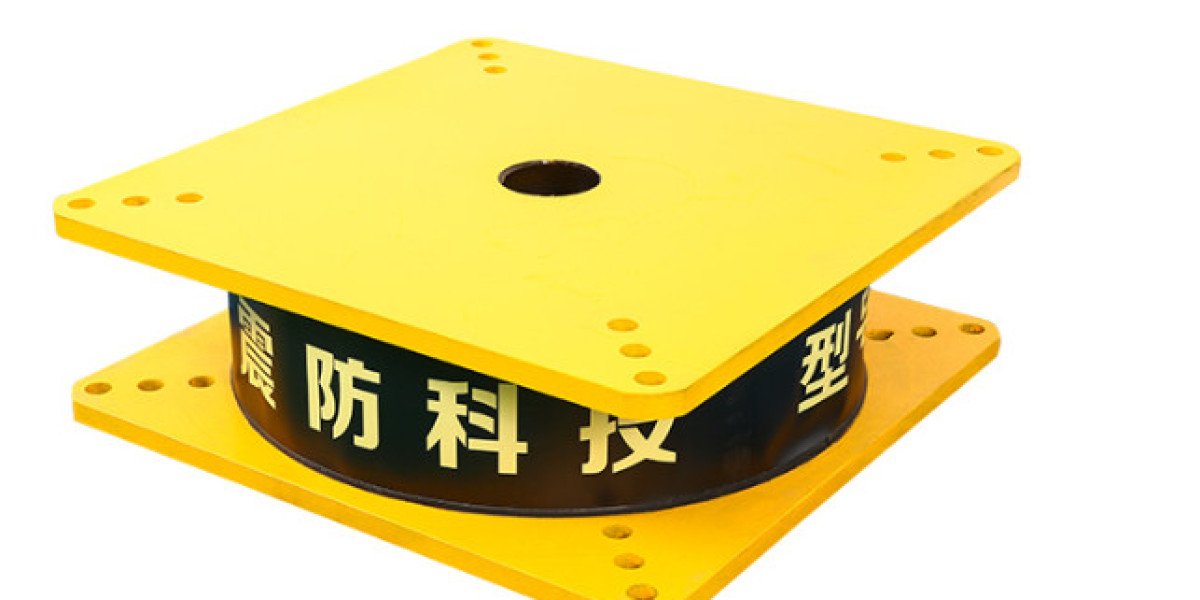

A linear rubber bearing does not only respond during earthquakes. In most buildings, it spends years supporting static structural loads while also accommodating small daily movements caused by wind, temperature changes, and equipment vibration. During this long service period, rubber materials may experience slow deformation behavior such as creep, where slight changes accumulate under constant pressure.
Load distribution is rarely perfectly uniform across all bearings in a structure. Different building zones such as cores, mechanical rooms, and structural edges may create variations in vertical force. As a result, a linear rubber bearing in one location may experience higher compression than another, even within the same system. Engineers often analyze load distribution maps to predict how these differences may influence long-term structural balance.
Temperature also plays an important role in material response. Rubber stiffness changes with seasonal variation, which can slightly influence how a linear rubber bearing reacts to movement and load. Although these changes are not usually critical in the short term, they become relevant when evaluating long-term performance across decades of building operation.
Daily structural movement is another factor often underestimated. Buildings continuously experience small displacement from thermal expansion, wind pressure, and operational vibration. While these movements are minor compared to seismic activity, they occur repeatedly throughout the building’s lifespan and contribute to the working condition of a linear rubber bearing.
Installation accuracy further influences performance. Small differences in alignment or elevation during construction can lead to uneven load transfer once the building is fully supported. These variations may not be immediately visible but can affect stress distribution over time.
Ultimately, a linear rubber bearing functions not only as a seismic protection component but also as a long-term load-bearing and movement control element within the structure.